Sweeping the Board at The Transform Europe Awards

Last night, at the Transform Awards Europe 2026, Designhouse took home six awards across two projects. A result that places us among the most decorated independent brand design agencies in Europe.

The awards cover 53 categories. With entries across the full spectrum of the industry, from major international networks to boutique studios. Three Gold awards, two Silver awards and one Bronze, makes us one of only ten agencies this year to achieve multiple Golds.


“We love partnering with you, and appreciate the immense push to just DO GREAT WORK. Yeeeha! “
Carrie Osman, Cruxy CEO & Founder


Creative Excellence


The awards recognise excellence across the full breadth of brand development. Including naming strategy and creative direction through to visual identity and brand evolution. To win across so many disciplines in a single evening reflects the strategic rigour that underpins everything we do.

Our work with data-led growth consultancy Cruxy was the standout story of the evening. We bagged four awards: Gold for Best Brand Evolution (Business), Gold for Best Visual Identity in the Professional Services sector, Silver for Best Visual Identity in the Financial Services sector, and Silver for Best Creative Strategy.

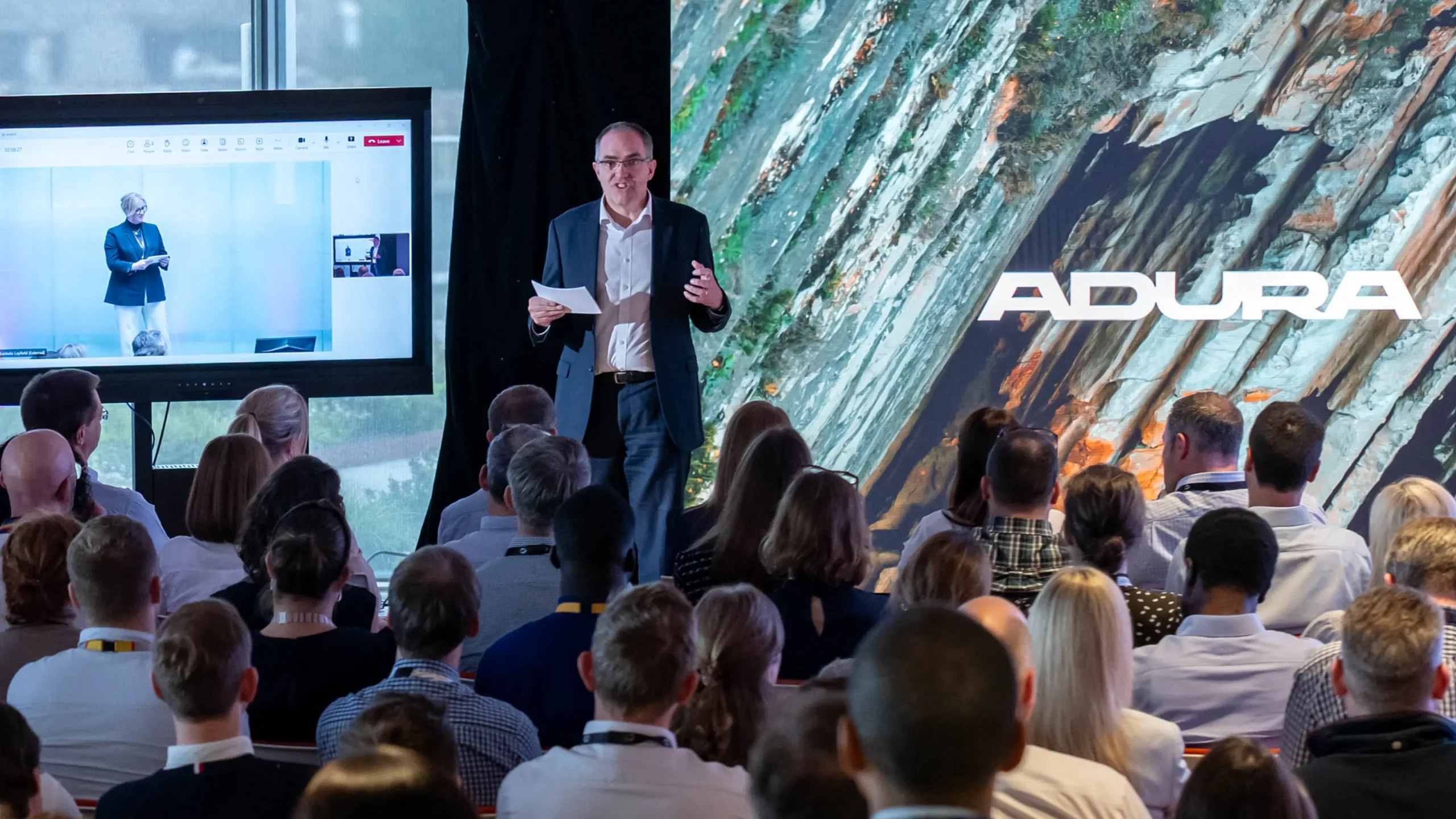
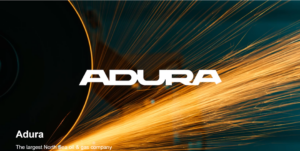
Adura, the Shell and Equinor  joint venture, won Gold for Best Naming Strategy (New Name) and Bronze for Best Visual Identity.


Getting to the Cruxy Gold


We worked closely with the Cruxy leadership team through a series of collaborative workshops to understand the firm’s genuine competitive differentiation. From those conversations, we identified a brand personality we named the “Calculated Maverick”. A balance of  intellectual precision combined with a daring, challenging energy. That single insight shaped every subsequent decision, from the visual identity to the tone of voice.


“an outstanding brand evolution that shifted the business with great results”


The judges were unambiguous in their assessment. On the Gold for Best Brand Evolution, the panel noted it was “an outstanding brand evolution that shifted the business with great results”.

On the Gold for Best Visual Identity, judges described it as “a strong rebrand that brings a unique brand personality to the sector”. The Silver for Best Visual Identity in Financial Services recognised “a design solution that succeeds with an identity that demands attention”.


“a design solution that succeeds with an identity that demands attention”


Additionally, the Silver for Best Creative Strategy acknowledged the work’s strategic foundation. Judges noted  the Calculated Maverick strategy, “expressed through bold geometry, a confident colour system and a voice that is incisive yet approachable, reimagined Cruxy as a consultancy that does not just advise, but also accelerates.”


“bold geometry, a confident colour system and a voice that is incisive yet approachable”


The commercial results speak for themselves. In the first half of 2025, Cruxy achieved a 136% increase in revenue compared to the same period in 2024. They went on to secure  over $250 billion in additional Assets Under Management.

These are not vanity metrics. This is strong brand strategy, designed coherently, to create commercial momentum that compounds over time.

You can read more about the Cruxy project here

Explore our thinking on brand strategy and ROI in our related piece here.


Building A New North Sea Brand, Adura


The Adura brief was a really demanding naming challenge. A JV between international energy companies, Shell and Equinor, needs a name that accomplishes several seemingly contradictory things at once. It has to establish immediate credibility as a major operator without any operational track record. A the same time it has to differentiate itself  from two parent companies whose combined heritage spans more than a century. And it has to resonate authentically with the broadest number of stakeholders. This includes the local Aberdonian community, government regulators, 1,300 transferring employees, and commercial partners in billion-pound negotiations.


“highly rigorous work that gives Adura a credible foundation”


Designhouse developed a rigorous naming methodology built around five criteria: authority, independence, regional connection, durability and flexibility.

The result “Adura” fuses Aberdeen with durability, embedding both geographical heritage and brand promise. A name that is a single, distinctive word that sits outside all the conventional naming conventions of the sector. Crucially, the phonetics were deliberate. Spoken with a Scottish accent, the hard D softens to produce a sound that carries regional warmth. At the same time, the visual identity system, with its granite-dense custom logotype and trapezium symmetry, reinforces the name’s qualities of permanence and structural integrity.


“super-strong concept with execution to match”


The judges responded with considerable enthusiasm. On the Gold for Best Naming Strategy, the panel described it as a “super-strong concept with execution to match”. They noted the brand name is “memorable and ownable, with great results.” The Bronze for Best Visual Identity acknowledged “highly rigorous work that gives Adura a credible foundation”.


“memorable and ownable, with great results”


You can read more about the Adura project here

Visit the Adura brand at adura.com


Celebrating with Clients

The evening was made all the more memorable by the warmth of our clients. Cruxy CEO Carrie Osman responded to the wins with genuine enthusiasm, “we love partnering with you, and appreciate the immense push to just DO GREAT WORK. Yeeeha!”

Cruxy Business Development Executive, Rosie Sugarman wrote. “Seeing it recognised like that really reinforces the quality, creativity and thought your team brings to everything we do together.”


“the quality, creativity and thought your team brings to everything we do together.”
Six awards at the Transform Awards Europe, including three Golds, is a result to be proud of. These awards are judged by a highly prestigious panel of experienced international Design Directors, brand and marketing leaders and industry creatives. The accolades reflect the quality of the work. They also reflect the close relationships we build with the clients who trust us with genuinely high-stakes briefs.

This is how great brand design actually works. Close, sustained collaboration between creative teams and client leadership. Relationships built on mutual trust and a shared commitment to ambitious outcomes.

For 55 years, that has been the Designhouse way. Last night was a fine reminder of why it matters.


Designhouse has partnered with FTSE 250 companies and global enterprises for over 50 years. We also work with start ups and scale ups to create brand identities that can grow with their business.  If you’d like to discuss your brand challenges, we’d be glad to talk.

Contact us

When The Shopper is an Algorithm

AI isn’t just changing how people shop. It is becoming the shopper of choice. In this post we’ll explain why that matters for your brand strategy.

Agentic commerce is when AI systems act on behalf of consumers to discover, evaluate, and purchase products. This is no longer a speculative scenario. It is taking shape now, in enterprise procurement tools, in consumer AI assistants, and in the broader infrastructure being built by the world’s largest technology companies.

If you’re responsible for brand strategy, the implications are significant. And they are arriving faster than a laser blink.

  • 63% of global retailers agree that companies without AI agents will fall behind within two years*
  • 58% believe AI agents will handle most customer interactions within five years*
  • 60% of shoppers will use agentic AI to make purchases within the next 12 months**

sources: *Deloitte, **Harvard Business Review

Marketing managers must fundamentally rethink how brands, customers, and AI interact. For anyone responsible for brand, the implications are significant. Read on to understand why and what to do about it…


The AI Customer


To understand the stakes, you need to understand the process.

A personal AI agent operating on behalf of a consumer or a procurement team does not browse in the way a human does. It does not linger on a homepage, respond to a mood board, or a well-crafted headline. Instead, it queries structured data, cross-references criteria, weighs variables against stated preferences, and returns a shortlist or a decision.

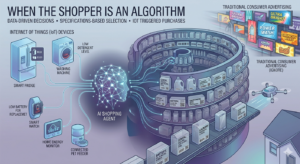
created using Gemini AI

Agentic commerce compresses days of human research, discovery, and comparison into instantaneous moments of evaluation. And this fundamentally changes how consumers allocate attention and make choices.


The New Criteria


The inputs AI agents use include

  • product specifications
  • pricing data
  • availability
  • reviews
  • sustainability ratings
  • structured brand data – machine-readable and consistently maintained across digital touchpoints

For example, I ask my AI agent find me options for a new TV.  And then the AI agent retrieves and filters options, applying a weighting to the search based on both my stated and inferred priorities. As a result, it may present recommendations, or increasingly, simply complete the transaction. Alternatively, it may advise me to wait while it monitors price fluctuations, and then will automatically buy when the price drops. My input is minimal, the AI is doing all the leg work and, crucially a lot of the decision making.

Therefore, a brand whose product appears in the agentic search has won. The brand that does not is invisible, regardless of how compelling its creative work might be.

This shift is already happening. Adobe reported that AI-driven traffic to US retail sites jumped 670% year-on-year on Cyber Monday. OpenAI is partnering with Walmart, Shopify and payment platforms like Stripe. Perplexity is working with PayPal. And Google just released agentic checkout options. All of which means a bot will search, shop and ship your favourite goods to you, with minimal human input. (GeekWire)

In the B2B space, the pattern is equally pronounced. B2B buyers are increasingly using AI tools to conduct the early stages of vendor research. The tools filter out a significant proportion of the competitive set before the human even sees them.

If your brand is not structured, consistent, and legible to machine systems at that filtering stage, it may never reach the conversation at all.


Brand Identity that’s Visible to Both Computer and Human


Research from Pernod Ricard’s head of digital and design illustrates the risk acutely. When the company analysed how leading AI models represented its brands, they saw immediate issues of mislabelling and lack of visibility. LLM data was often incomplete or incorrect, with one popular model miscategorising an affordable mass-market whisky as a prestige product (Harvard Business Review). The consequences of that kind of misrepresentation, at scale and at speed, are considerable.

Most brand investment is built around human perception. Visual identity conveys authority. Tone of voice builds trust. Campaigns that create emotional connection. These things remain valuable, but now, they are only part of the picture.

The other part, the one that agentic systems respond to, is structural. It is the coherence and consistency of your

  • product data
  • brand architecture across digital channels
  • accuracy and completeness of the information that AI systems read

The disciplines of brand management and data architecture are becoming inseparable.


The Brand Coherence Advantage


By 2030, the US consumer retail market alone could see up to $1 trillion in revenue generated by agentic commerce. Global projections are estimated at as much as $5 trillion. (Microsoft) 

In this new world, organisations with strong, consistently maintained brand architecture have the advantage. A brand that means one thing clearly, that presents itself consistently across every channel and system, is easier for an AI agent to assess and surface. A brand with fragmented positioning, inconsistent written content, or poorly structured digital infrastructure presents as ambiguous. And ambiguity is completely incompatible with algorithmic decision-making.

The organisations that are best placed in an agentic commerce environment will be those that have invested in brand foundations:-

  • clear positioning
  • rigorous consistency
  • well-structured brand architecture

Brand equity now needs to be read by the systems increasingly making decisions on behalf of your customers. If that’s not happening, your  equity  is quietly being eroded. Have a look at your brand architecture today and ask yourself

  • is it coherent?
  • is it consistent?
  • is it searchable?

The brands best placed for this shift are already asking these questions. If you are not yet, now is a good time to start. We can help.

Contact

Case Study: ISIS Markets


Preserva: a new brand that’s more than a load of old balls

Young entrepreneur Freddie Bott was 23 when he looked at a dead tennis ball and thought, there has to be a better way.

The result is Preserva  a brand that is as fun to look at as it is clever in concept.

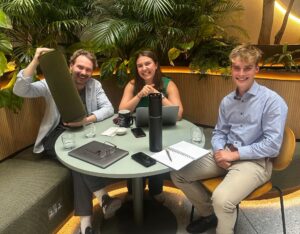
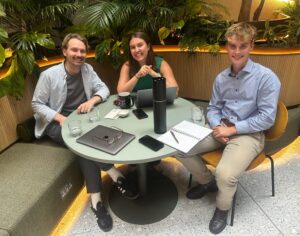
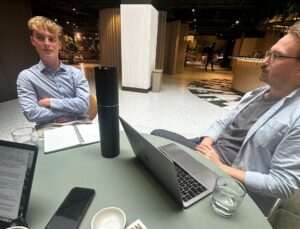
from L: Design Director Matt Gillman, Account Exec Millie Regan and Freddie Bott discussing the project


Product


The product is simple and brilliant. Preserva is a fully automatic, rechargeable pressuriser that restores tennis and padel balls to their original playing condition, keeping them performing like new for at least four times longer.

With over 300 million tennis balls going to landfill every year, Bott’s solution is timely, practical and genuinely impactful.


Solution


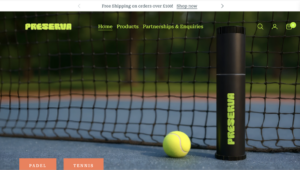
The brand identity we created for Preserva reflects exactly what the product is: unpretentious, energetic and a little bit cheeky. The logo is deliberately soft and rounded, playful in its form. It has a squishy quality that feels at home on a court bag as much as it does on screen. Like Freddie, the logo does not take itself too seriously, and that is entirely the point.


After a detailed briefing with Freddie, the creative treatment is inspired by the pressure inside the balls and the tube. The logo’s letterforms designed to reflect that pressure.

And while many sports brand are  heavily visually influenced by data and performance, Preserva deliberately is not. For example, brands like F1, Adidas, NBA, WHOOP and Oura build their entire visual identity around metrics, waveforms and performance-data.

While there is an obvious performance benefit to keeping tennis and padel ball pressure at their best, the brand isn’t truly about this. At it’s heart it’s about extending ball life, and in doing so extending play-time, as well as being more economical and sustainable along the way.

The bright, bold and confident green and orange of the colour palette are synonymous with the worlds of tennis and padel. They also pay more than a passing nod to the enthusiastic energy of the founder.

All of which make for a brand that’s hard to miss on a crowded retail shelf or a fast-moving social feed.

Underneath the playful exterior, the functional message is always present. The packaging is clean and clear, the product promise is front and centre, and every touchpoint communicates reliability without sacrificing the brand’s character.


Freddie set out to solve a real problem. Designhouse set out to make sure the world noticed. We think we managed both.


Designhouse has partnered with FTSE 250 companies and global enterprises for over 50 years. We also work with start ups and scale ups to create brand identities that can grow with their business.  If you’d like to discuss your brand challenges, we’d be glad to talk.

Contact us

200 Million Dollar Lesson in Brand Trust

Earlier this month, when Anthropic refused the Pentagon’s demand to remove ethical guardrails from ClaudeAI, it lost a 200 million dollar contract overnight. Ouch!

Within hours, OpenAI, parent of ChatGPT, stepped in and took the deal.

Smart business move by ChatGPT’s Sam Altman? Not really.

  • ChatGPT uninstalls surged 295%
  • Social media was alight with calls to “cancel ChatGPT”
  • Key staff quit Open AI
  • Claude hit number one on the App Store for the first time ever
  • Claude installs rose by 51%
  • 36% increase in revenue for Anthropic in just two weeks


Chat GPT agentic soldier created using AI

Trust Vs Profit


This is not a new story for brand equity watchers. At huge cost, Johnson & Johnson recalled 31 million bottles of Tylenol, and gained an invaluable long term reputation as the guardian of America’s public health. Patagonia told customers not to buy its products during Black Friday sales. Nike put Colin Kaepernick on its billboards while the stock was falling. In each case, the short-term loss was visible and measurable. The long-term gain was something ultimately more valuable. You can’t put a number on consumer trust.

This is the brand loyalty that comes from watching a company absorb a hard financial hit and hold its line anyway.

Consumers have become sophisticated readers of corporate behaviour. They know the difference between a brand that talks about values and one that walks them.

In the face of overwhelming consumer backlash, Altman publicly admitted his move “looked opportunistic and sloppy” and has rolled back back his Pentagon support. The damage to the ChatGPT brand may be harder to recover.

Integrity is not the enemy of growth. It is the foundation of it.


Designhouse has partnered with FTSE 250 companies and global enterprises for over 50 years. We create brand identities that are authentic and long lasting.  If you’d like to discuss your brand challenges, we’d be glad to talk.

Contact us

ISI brand: from patchwork to platform

Challenge


ISI had a problem that many ambitious, fast-scaling B2B organisations will recognise. The commercial story was compelling, the products were best-in-class, and the growth trajectory was clear. The brand, however, was not keeping pace.

Across five strong product lines, CEIC, EMIS, EPFR, REDD and iMoneyNet, ISI had, through a smart M&S strategy, built genuine market authority. Each sub brand carried real equity with its audience. But viewed together, the portfolio told a fragmented story. Separate visual languages, disconnected narratives and a corporate identity that did not reflect the integrated intelligence platform the business now is.

The brief was clear, and the ambition behind it impressive. Our task was to build a brand architecture that unified the portfolio under a single, coherent identity. The trick was to maintain the product-level equity that ISI’s marketing team had spent years building.


Outcome


The identity is bold and deliberate. A distinctive mark reduced to its most essential form. A primary palette anchored in a striking orange. And a typographic system that balances editorial character with functional precision. ISI’s marketing team now have exactly the framework they need:

  • clear rules
  • scalable systems
  • consistent execution across regions and formats

We started, as we always do, with the strategic work. Stakeholder interviews, a competitive landscape review and a rigorous brand audit. This gives us a coherent base of insight from which to build. Three strategic hypotheses were developed and tested with the ISI leadership team before we settled on a direction.

The resulting brand model established a clear hierarchy. A strong, confident master brand identity for ISI. Each product line with its own lockup and positioning. Crucially all sub brands are now now visibly connected to the group.


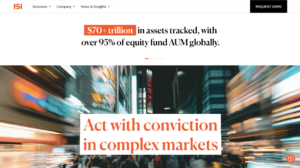
The new website, designed and built by our in-house digital team and launched this month, is the most visible expression of that work. It surfaces the integrated nature of ISI’s data platform. With improved navigation across the product portfolio, it positions the group for the enterprise conversations it is now ready to have.


This bold brand refresh reflects the progress we have made as a group and embodies the distinctive role we play in the ecosystem, helping our customers cut through complexity and act with conviction.

Steve Pulley, CEO


For any marketing leader managing a complex portfolio of sub-brands, ISI’s journey is instructive. Brand coherence is not a cosmetic exercise. Done properly, it is a structural asset, one that reduces the cost of execution, sharpens commercial positioning, and builds the long-term value that a business of this ambition deserves.

Visit isimarkets.com to see the new brand in action.

Learn more about the importance of brand architecture and coherence here


Designhouse has partnered with FTSE 250 companies and global enterprises for over 50 years, delivering strategic brand consultancy that creates measurable competitive advantage. If you’d like to discuss your brand challenges, we’d be glad to talk.

Contact us

When a Cheaper Competitor Launches, Does Your Brand Hold?

Sometimes brand investment is short term and dates quickly. And then there is a smarter investment, brand design that compounds and lasts. The Heathrow Express story is the latter. This is a case study in strategic brand investment that delivered measurable ROI across fifteen years, through competitive disruption, a global pandemic, and a market that looked very different in 2025 than it did in 2011.


Where We Started


When we partnered with Heathrow Express way back in 2011, ahead of the 2012 London Olympics, the brief was about more than a visual refresh. The challenge was to modernise a recognised brand without losing the equity already built into it. We had to create a visual system robust enough to sustain premium positioning for the long term.

We started with hard research, not aesthetics.

  • Passenger perception
  • Journey mapping
  • Competitive landscape
  • Careful auditing of what to retain versus what to evolve

The result was a comprehensive brand architecture, applied consistently across

  • 150 daily services
  • Every customer touchpoint, from livery and uniforms to ticketing, wayfinding, and real-time digital communications

The work was recognised immediately. Heathrow Express won a Transform Awards Gold for Best UK Rebrand, seen as the most innovative, premium train brand in the country, closely aligned with business and first-class air travel.

The commercial impact was equally swift. In 2011, Heathrow Express carried 5.68 million passengers, a 5.9% increase on the previous year. In 2012, despite the Olympic period triggering a significant reduction in overall airline passengers across the board, the service still carried 5.6 million. Corporate client retention grew to 88%, and the number of corporate accounts grew 94% year on year. The new brand was already doing its job.


Where We Ended


The more telling results came a decade later.

In 2022, the state of the art Elizabeth Line launched. Lower fares, broader connectivity, and a direct competitive challenge to Heathrow Express’s passenger base. Brand equity, in moments like this, either holds or it doesn’t. For Heathrow Express, it held, delivering

  • 94% Customer satisfaction, the highest in UK rail.
  • 73% Value-for-money ratings, the highest of any UK train operator, despite premium pricing.
  • 93% Punctuality satisfaction
  • 91% Cleanliness
  • 94% Personal safety at 94%

By Q3 2025, passenger journeys had grown 18% year on year, making Heathrow Express the primary driver of growth across all open access operators, according to the Office of Rail and Road.


TLDR


  • Premium pricing
  • Volume growth
  • Industry-leading satisfaction
  • Fifteen years after the original investment

This is what strategic brand work looks like when it’s built properly. Not a campaign, not a cosmetic update, but a system designed to create competitive advantage over time and resilient enough to withstand genuine market disruption.

Read the full case study


Designhouse has partnered with FTSE 250 companies and global enterprises for over 50 years, delivering strategic brand consultancy that creates measurable competitive advantage. If you’d like to discuss your brand challenges, we’d be glad to talk.

Contact us

2025 Brand Glow-ups and Blow-ups

The Year Digital-First Design Became Non-Negotiable


2025 marked a turning point – the world’s most valuable brands stopped designing for print and started designing for screens. The evidence is clear in the work, and more importantly, in the results.

  • 30% of stock market value for S&P 500 companies is driven by brand strength (The Economist)
  • 40%+ of a company’s market cap comes from brand and reputation, according to 60% of CEOs. (World Economic Forum)
  • 56% higher total returns and 32% more shareholder return come from strong-reputation brands (McKinsey & Company).

Play with your brand equity at your balance sheet peril (yes, we’re looking at you Cracker Barrel and HBO Max)

So who were the winners and losers in the rebrands, evolutions, make-overs and muck ups of the year? We’ve listed a few below, and identified the three strategic trends that have defined 2025…


Trend 1: The Gradient Shift, Signalling Adaptability in Static Logos


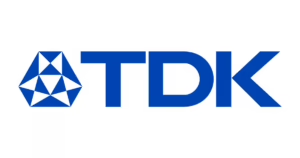
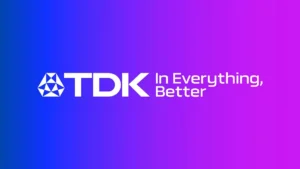
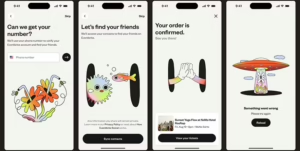
Google, Microsoft, TDK Electronics, and Eventbrite all introduced gradient colour systems where solid blocks previously existed


TDK logo redesign, before and after


Microsoft’s Jon Friedman explicitly connected this shift to AI and “how AI is shifting the discipline of design.” Gradients signal continuous transformation and adaptability, critical messages when your market perceives change as the only constant. TDK’s gradient, developed by Interbrand “symbolizes TDK Transformation,” directly tying visual evolution to business strategy.


the evolution of MS icons


These aren’t aesthetic choices, they’re positioning statements that communicate organisational agility with innovation to secure ROI.


Trend 2: Screen-Native Design (The Death of Print-First Thinking)


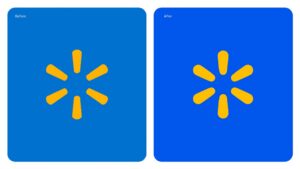
Rounded corners replaced sharp edges across Microsoft Office, Walmart‘s spark motif, and Bentley’s winged B. Lufthansa Group removed its circular frame entirely. Amazon‘s rebrand by Koto prioritized “digital-first” colour saturation for Prime.


Simpler shapes, sharper, brighter colours all features of 2025 most successful brand redesigns


With Microsoft alone serving 400+ million Office users daily on screens, legibility at small sizes became business-critical. The Word icon dropped from four rectangles to three specifically to “reduce visual noise”, a direct response to mobile-first usage patterns.

Brands that haven’t optimized for 20px favicon displays and notification icons are actively losing recognition in the environments where engagement happens.


Trend 3: Vibrant Colour Recalibration: Standing Out in Saturated Digital Feeds


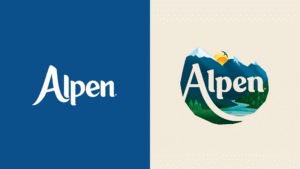
Eventbrite introduced “highlighter neons,” Alpen moved from heritage muted tones to “creams, blues and greens designed to bring vitality,” Amazon standardized “Smile Orange” after years of iterating sub brands with different colours, type fonts and inconsistent shades. And Walmart’s “spark” motif logo and yellow and blue palette were designed to be bolder and brighter than the 2008 iteration while remaining largely similar.


Eventbrite’s neons, Alpen’s colour glow-up, Walmart’s subtle evolution, with more vibrant blues and yellows


In algorithmically-curated feeds where users scroll past 300+ posts daily, colour becomes the primary stopping mechanism. Brands competing for attention needed saturation levels that registered on backlit screens, not just printed packaging.


The Billion Dollar Cost of Brand Equity


Cracker Barrel demonstrated how not to mess with your brand logo this year:

  • Removed 98-year heritage logo for generic wordmark
  • Stock dropped 10% within days (-$200M value)
  • Full reversal within weeks


original logo -> August 21 2025 rebrand -> August 27 2025 revert


And Cracker Barrel were not alone in what industry experts call the “corporate walk of shame”.

The HBO Max → Max → HBO Max debacle was roundly ridiculed and described as “the pinnacle of walking away from brand equity.” Having dropped the most recognisable and much loved brand element, HBO, two years ago, HBO has now been re-instated to the platform branding. The rebrand cost alone exceeded “what some streamers spend on content.”


Article content
HBO Max’s log walk of brand shame

Both brands confused modernisation with erasure. The strategic failure is the knowledge that 50+ years of consumer recognition has quantifiable value that vastly exceeds the cost of evolutionary refinement.


The New Brand Paradox: Instant Credibility Without Heritage


When Shell and Equinor needed branding for their North Sea joint venture, they faced the opposite problem: how to project 50 years of credibility on day one when entering a market where competitors were actively exiting.

The solution required encoding durability into every design decision, from the name (the A of Aberdeen + dura of durability) to the custom wordmark “deliberately designed to feel dense, as if carved out of granite.” Even the phonetics were strategic: spoken with a Scottish accent, the hard “D” softens to “Ajura,” balancing industrial authority with regional warmth.

Instant authority, Adura, Shell and Equinor’s North Sea joint venture


Whether preserving existing equity or manufacturing instant credibility, strategic design must encode the business positioning into visual systems that communicate before words do.


Designing For Tomorrow’s Digital Context


The brand evolutions we’ve seen in 2025 are infrastructure investments responding to three measurable pressures:

  1. Mobile-first consumption: 60%+ of brand interactions now happen on screens under 6 inches
  2. Algorithmic distribution: Brands must optimize for feed-based discovery, not destination sites
  3. Global scalability: Multi-market operations demand systematic consistency over artisanal variation

The best redesigns came from creatives at Interbrand, Koto, Buck Design Ltd, BrandOpus, and our teams at Designhouse, all delivering work that prioritized systematic scalability over singular creative expression.

Whether unifying 50+ sub-brands (Amazon/Koto) or encoding instant credibility into new ventures (Adura/DesignHouse), the emphasis shifted from logo artistry to strategic systems thinking.


What This Means for B2B Brands in 2026


If your brand identity was designed before 2020, it likely optimizes for contexts that no longer drive business outcomes:

  • Print collateral that sits in drawers
  • Trade show booths visited by declining attendance
  • Desktop-first websites losing traffic to mobile

The question isn’t whether to evolve, it’s whether to do so proactively or reactively after your competitors have already captured the positioning premium.


DesignHouse has created strategic brand transformations for global leaders across telecommunications, transport, energy, and consumer sectors for over 50 years. Based in London, we combine strategic rigor with design excellence to create identities that drive business outcomes.

https://designhouse.co.uk/