There is a formula for creativity

In this article we discuss


In a recent pitch, a client asked what’s the science behind our creative process. It’s a reasonable question from someone signing off a six figure brand investment, and it deserves a considered answer.

There is science. There is also, as it turns out, a formula for creativity. An actual theorem, written by a mathematician who spent the early years of her career operating one of the first computers ever built.

Dr Ruth Noller began her working life in 1944 at Harvard, on the Mark I.

a large early computer that is the size of a room with rows of punch cards and ticker tape
Harvard Mark I computer, Getty Images

The machine was a beast: 51 feet long, eight feet high and weighing close to five tonnes. It had around 765,000 components and a massive 50 foot camshaft, all in order to run calculations for the US Navy in the closing years of the Second World War. Operating it demanded absolute step by step logic. A single misplaced punch card or a misaligned gear stopped the entire system.

Machines execute that type of rigid, linear calculation flawlessly. Through the work, Dr Noller came to see that human beings did something else entirely, generating ideas that had never previously existed.

Which is why she spent the remainder of her career studying human creativity.

At Buffalo State University she worked alongside Alex Osborn, who originated brainstorming. And, with Sidney Parnes she developed the Osborn-Parnes Creative Problem Solving process. That work underpins the university’s world leading Centre for Applied Imagination.

The creativity formula

Being a mathematician, Dr Noller devised a rather elegant formula for creativity:

C = ƒa (K, I, E)

The formula shows how Creativity is an output of applied Knowledge, Imagination and Evaluation. Knowledge is what we hold. Imagination is what we can conceive. Evaluation is the judgement of which idea to pursue. Attitude is the function that operates as a force multiplier across all three. Noller’s research specifically referenced positive mental attitude, a ‘can do’ mindset, if you like, as the real differentiator.

Creativity v. Innovation

If the formula describes the process, Theodore Levitt supplied the commercial application. Writing in 1963, the Harvard Business School marketing professor was dismissive of the “ideas business”. Creativity is thinking up new things, and anyone can do that, he argued. The real challenge is making those ideas work for the business: that is innovation, and the discipline it demands is scarce and expensive.

Innovation is something of a cliché across B2B brand messaging. Everyone claims it, and the difference between creativity and innovation is rarely spelled out. Levitt was blunt about it, “ideation and innovation are not synonyms”  he wrote. Ideation generates the idea. Innovation is the work of implementing it successfuly.

Both disciplines matter enormously for anyone allocating a brand budget. Innovation depends on creative thinking having happened first, and on a process rigorous enough to take an idea from a Post-it to a successful market position.

Brand is where the idea becomes commercially readable. It makes innovation legible to customers, investors and employees.

Three practical implications for marketing leaders

When you are deciding which agency to work with, Dr Noller’s formula is a useful reference structure.

  • Knowledge and Imagination. Ask what an agency already understands about your category before the first workshop. As well, ask where its ideas come from once the obvious territories are exhausted. Brand architecture, naming and positioning create value that accrues for years. Fuller’s Brewery has grown brand equity for over three decades on a Designhouse identity that has never required a redesign. Measured against the cost of starting again, that is the long term return of work built on strong creative foundations.
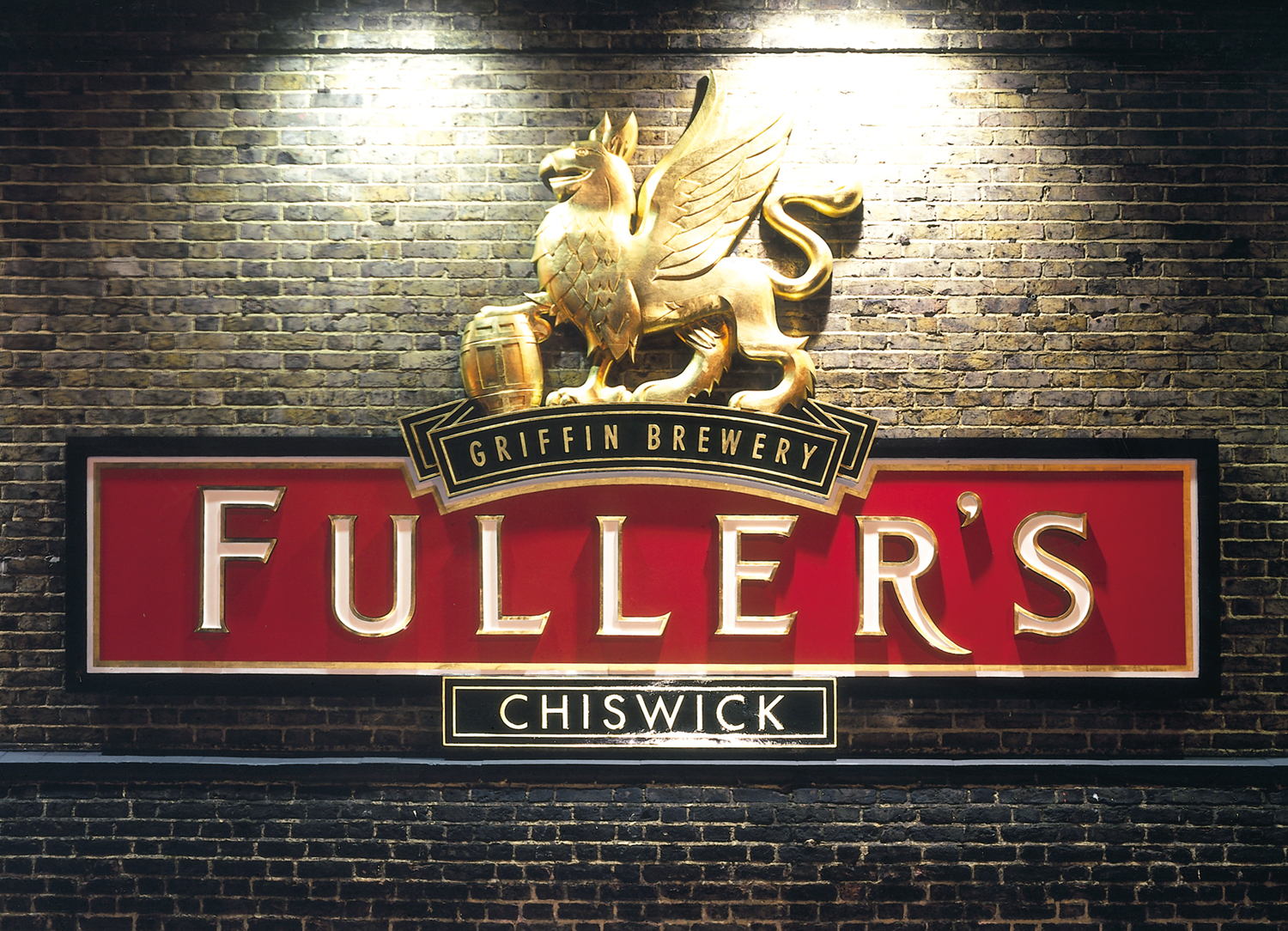
Fuller’s Brewery Brand identity


  • Evaluation. Most credentials decks describe how ideas are generated. Ask how routes will be assessed, against which criteria, with which stakeholders, and who gets the final call. Evaluation is where projects are won and lost. On Adura, the Shell and Equinor joint venture in the North Sea, every significant decision was a judgement about people and consequence: how a name would sound in Aberdeen, how much heritage to carry from two parent companies, how far to lean into transition language in a sector under close scrutiny. As Levitt would say, the ideas were the easy part!
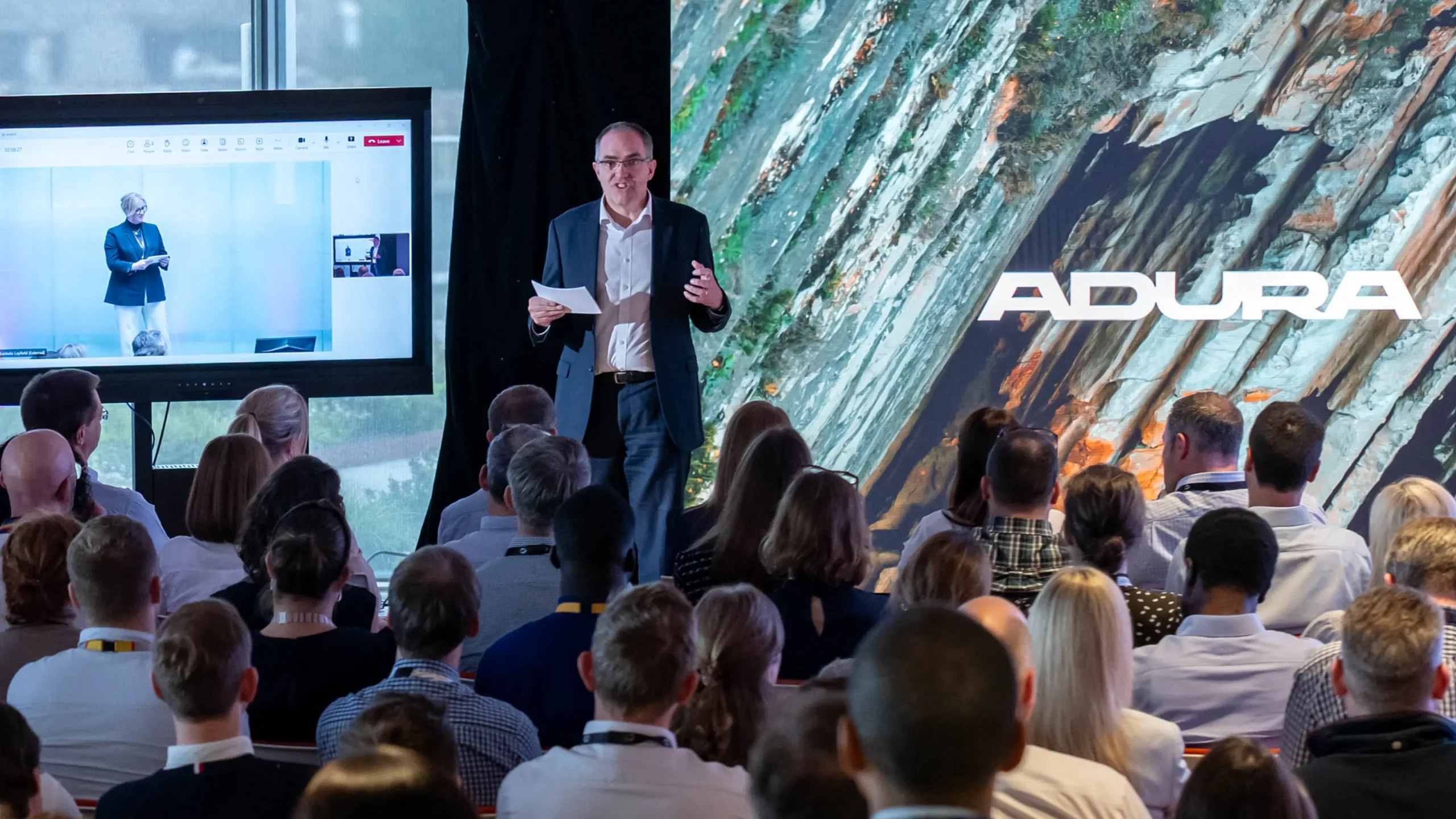
Adura brand launch


  • Attitude. Noller’s multiplier is crucial. Meet in person wherever possible. You can tell within an hour whether a team is invested in your commercial outcome or in the portfolio piece. The team’s disposition, and the chemistry between you, is one of the more reliable predictors of what the work will be worth in three years.
A planning and strategy meeting
Designhouse team in the studio


The human advantage

Dr Noller began thinking about human creativity  in 1944 and spent a career researching it. The formula is as valid today as it has ever been.

With Large Language models, Knowledge has become abundant. Imagination, judgement and conviction remain the scarce inputs and the specialist human skills worth paying a premium for.

written by Sam Steele, Marketing and Communications Director, FCIM


Designhouse has partnered with FTSE 250 companies and global enterprises for over 50 years. We also work with start ups and scale ups to create brand identities that can grow with their business. If you’d like to discuss your brand challenges, we’re ready to talk.

Contact us


Turn on, Tune in, Get Out

When the sun shines and the longest days keep the evenings bright the Designhouse team go foraging for brain food. Fave hunting grounds include galleries, festivals and the occasional darkened cinema. We asked the studio team for their creative summer recommendations. Here is a veritable menu of must-dos, a smorgasbord for your brain, and restoratives for your imagination.

Here is what we are loving right now…


TeamLab Borderless, Tokyo

“A digital interactive art exhibition across a series of rooms with no start or end point. Artworks move out of rooms, relate to other works, influence each other and are influenced by you walking through the rooms and touching the artwork itself. I loved how they fused digital technology, sounds, smells and lighting to create a truly magical few hours of exploration.”

 Jonti Davies, Client Services Director


Wes Anderson at the Design Museum

“Vivid, highly saturated and bright, this is the colour world behind some of Anderson’s most iconic films, which is to say most of them. A fascinating window into a brilliantly creative mind.”

 Sam Steele, Marketing Director


Inside Aardman at the Young V&A

“Loads of models, storyboards and insight from the Aardman team. It’s a joy. On until mid November, so plenty of time to go. I’m not biased, but it is in Bethnal Green, so it’s easy to go to my local after.”

 Natalie House, Studio Production Manager


It was Just An Accident

“The subject is heavy and sad but there is a bit of comedy in it and it’s very well made. Plus we all love to look cool watching subbed movies”

 Cristina Taje, Senior Account Manager


Escher at Somerset House

“I loved Escher as a kid. Graphically powerful and geometric, it plays with perception and negative space. Brilliant draughtsmanship and imagination.”

 Richard Debenham, Creative Director


Oceanographic Museum, Monaco

“An immersive, interactive space and time journey to 2050. It encourages the  650,000 annual visitors to the Oceanographic Museum to  become involved in the protection of the Mediterranean.”

 Al Connolly, Senior Designer


Marilyn Monroe: A Portrait, National Portrait Gallery

“The exhibition explores her iconic image and the personal brand that was created around her, with brilliant photographers featured.”

Sam Mayhew, Designer


David Hockney, “A Year in Normandie” at the Serpentine
Hockney’s sweeping frieze follows the slow turn of the seasons across the Normandy countryside, painted with the freshness of an artist still chasing the light in his ninth decade.

Matt Gillman, Creative Director


That is the studio’s summer in one list. Curiosity goes where it likes, and it always comes back with something worth sharing. Enjoy the summer!


Designhouse has partnered with FTSE 250 companies and global enterprises for over 50 years. We also work with start ups and scale ups to create brand identities that can grow with their business. If you’d like to discuss your brand challenges, we’re ready to talk.

Contact us

Britain’s brands return to growth

UK brand value returned to growth in 2026, with the country’s leading brands adding £45.4 billion over the past year, according to new figures from Brand Finance. At the report launch, Mark Ritson asked the room to look harder at what really drives it.

The UK’s 250 most valuable brands grew by 12% to reach £448.9 billion in 2026, the first year-on-year growth since 2023. This is according to Brand Finance’s annual UK report published this month. Britain’s biggest brands added £45.4 billion in collective value over twelve months.

Growth was broad based, spread across the economy. Banking is now the UK’s most valuable sector, lifted in part by Revolut, the fastest-growing brand of the year at 246% to £5 billion, and a 24% rise in banking sector value overall. Aerospace and defence recorded its strongest gains since 2012, and consumer brands now account for eight of the UK’s ten strongest.

One finding drew particular attention. Brand Finance’s analysis shows the UK’s most trusted brands increased in value by 15% over the year, while the least trusted brands saw their value fall by 4%. Emotional responses to brands are difficult to quantify financially. This report shows that trust is directly associated with performance.


Can we trust trust?


Speaking at the launch, the marketing expert and Mini MBA founder Mark Ritson put a deceptively simple question to the room. Can we trust trust?

Drawing on examples ranging from Johnnie Walker to Betty Crocker, he examined how strong brands build emotional connections, and he questioned the assumption that trust alone drives growth. His argument placed salience, being the brand that comes to mind first, among the most powerful levers available to marketers. He left the audience with this question. Should brands focus on being trusted, or on being remembered?


Consistent and coherent


The answer is, of course, both. Trust and salience accumulate through the same discipline: consistent and coherent brand investment sustained over years. The brands climbing this year’s ranking are remembered because they are visible and distinctive. They are trusted because they behave consistently over time.

Shell, a brand Designhouse is proud to count among its clients, marks a decade as Britain’s most valuable brand. Its value rose 16% to £39.5 billion. Other clients, Vodafone,  and British Gas both saw their brand value rise, Centrica held its position in the ranking.

The cumulative value of the UK’s top 100 brands has grown 33% since 2016, through repeated periods of economic disruption. Automotive showed the reverse, with total sector brand value down 22% as Jaguar, Range Rover, Defender and Discovery all declined.

The JLR brands demonstrate the trust and salience point precisely. In 2025 Jaguar interrupted its own identity with a controversial rebrand, and at the same time a cyberattack interrupted JLR’s ability to supply, so the brand was neither reliably recognisable nor reliably present.

Brand value is a financial asset. Brand strength accounts for 30% of a company’s stock market value according to the Economist. And like any investment, Brand when managed well compounds value.

Designhouse has spent 55 years helping clients build brands that endure through exactly these cycles. Whether the goal is to be trusted, remembered, or both, the route is the same. Strategy, applied consistently, takes shape as value.

written by Sam Steele, Marketing and Communications Director, FCIM


Designhouse has partnered with FTSE 250 companies and global enterprises for over 50 years. We also work with start ups and scale ups to create brand identities that can grow with their business. If you’d like to discuss your brand challenges, we’re ready to talk.

Contact us

The brand story behind a trillion-dollar IPO

What is the brand story behind the largest IPO in history, and what is stopping your organisation from getting there? Maybe less than you think…

In June 2026, SpaceX went public at a valuation near $1.8 trillion. This is a company that posted a net loss the year before. So what was driving the valuation? Investors were pricing in the strategy. And this is how it works…


The value add


SpaceX is the headline act in a wider portfolio that could hardly be more disparate. Moon rockets and inter-planetary spacecraft; satellite internet through Starlink; social media platform X; the Grok AI engine; and even facilities management.

A single stated worldview holds them all together. And that is a future that is multiplanetary, sustainable and AI-powered, framed throughout as work for the good of humanity. Starlink funds the rockets. The rockets carry the mission. Each venture earns its place by advancing the same idea, so the parts compound rather than compete. Whatever you think of Elon Musk, the clarity is the asset, and the market has put a price on that clarity.

Clarity is the gold standard. The more common business reality looks much more brassy.


The complexity cost, or when 1+1=0.25


We are often brought into complex organisations where nobody can articulate the business strategy, and thus nobody can articulate a brand strategy. When the commercial direction is unspoken, the brand has nothing to give shape to, and every decision after that is amorphous and disparate.

Brand gets treated as a cosmetic wrapper. The assumption is that audience understanding will assemble itself through repeated tactical exposure. Brand equity built like that is vapour thin. And it evaporates the moment the activation stops.

The most insidious erosion happens when an organisation sees itself as a federation of sub-brands. Each sub-brand with its own audience, culture and budget. The assumption being that a single-mission-led voice is beyond reach. Well, not according to SpaceX.

In a fragmented business, 1+1 makes something closer to 0.25. Each sub-brand spends to build its own corner, none of it accrues to the parent. Audiences see a scatter of unrelated signals where there should be one organisation worth considerably more than the sum of its parts (hello again SpaceX).

The market has started to price that cost in the open. The 2025 and 2026 wave of corporate breakups, from Kraft Heinz to Honeywell, is a public admission that brand complexity without coherence erodes value. Brand focus is what releases it.


Business first, brand second


The route through is sequential, and the sequencing is crucial.

Business strategy first, so the organisation knows what it is trying to achieve.

Brand strategy next, so that intent takes a form audiences recognise.

Then an architecture that lets each sub-brand borrow equity from the parent and give it back, so the parts strengthen the whole and the whole lifts the parts.

Scale comes from coherence, from every pound and every message pulling in the same direction.


Discipline pays


SpaceX shows what a clearly held mission allows. It can absorb disparate acquisitions because every deal is narrated back to the same idea: compute feeding models feeding applications feeding the multiplanetary, AI-powered future. That is brand discipline. And the IPO shows how it has been used to create record-breaking value.

Brand investment is a business decision, and we treat it like one. At Designhouse we can help you define your strategy, then make that strategy take shape, so you have a brand strategy and a brand that drives ROI across your entire business landscape.

The trillion-dollar insight is business clarity, not rocket science!


written by Sam Steele, Marketing and Communications Director, FCIM


Designhouse has partnered with FTSE 250 companies and global enterprises for over 50 years. We also work with start ups and scale ups to create brand identities that can grow with their business. If you’d like to discuss your brand challenges, we’re ready to talk.

Contact us

Brand architecture in the age of AI

AI tools shape how prospects discover and shortlist brands. The organisations that appear accurately in those answers are the ones with clear, well-structured brand architecture. This article examines why brand architecture has become critical infrastructure for visibility and ROI, drawing on research and our work rebuilding EMCOR UK’s brand into four propositions that every stakeholder, human or AI, can understand.


The way people discover brands has fundamentally shifted. Your prospects are no longer clicking through pages of search results to compare options. Instead, they’re asking ChatGPT, Gemini or Perplexity for answers, and AI is making the choice for them.

And this is vitally import to you because

For B2B marketers, the implications are profound. When a potential client or customer asks an AI assistant to “find me XXX companies in London,” your brand needs to appear in that response and be accurately represented.

Organisations with clear brand architecture achieve 3.5 times more visibility than those without it.  (Harvard Business School)

And different large language models rely on different data sources and retrieval methods. Without a structured approach to how your brand and its offerings are organised and communicated, AI systems struggle to understand and accurately represent your value proposition.


Make your brand work harder to deliver ROI


Companies with well-defined brand architectures deliver superior stock returns, according to research.

Brand architecture delivers even greater advantages in B2B contexts. This is because

  • 20% uplift in EBIT margin which illustrates how brand equity translates into greater profitability. (Mckinsey)
  • 30% of a company’s market value comes from brand and reputation, underscoring the investor relevance of cohesive architecture. (PWC)
  • 97% of B2B decision-makers say branding influences awareness and 95% say it drives differentiation, which is critical in long, multi-stakeholder buying cycles. (LinkedIn)
  • 92% of buyers start with a shortlist and 41% already have a preferred vendor. To succeed, vendors must focus on building brand recognition and trust early to ensure they are on the initial shortlist. (Forrester)


Clarity over complexity


Brand architecture typically follows one of five models.

  • The branded house approach, used by companies like Apple, unifies all offerings under a single master brand identity.
  • The sub-brand system references the master brand and adds a unique product or service name, like car manufacturers do eg: the Toyota portfolio includes the Toyota Prius, Toyota Corolla etc…
  • The house of brands model keeps each brand entirely separate, as Unilever does with Dove and Persil.
  • The endorsed brand model allows sub-brands independence whilst maintaining a connection to the parent company.
  • The hybrid model blends these approaches based on specific business needs.

David Aaker, vice chairman of brand consulting firm Prophet, puts it simply: “The goal should be to have the fewest relevant brands needed to meet the business goals”. (Brand Portfolio Strategy, p.16) For most B2B service firms, it’s clarity over complexity every time.

Traditional SEO gave marketers clear metrics: rankings, impressions, click-through rates. AI-driven discovery operates differently. There’s no SERP position to track, no obvious signal that tells you whether ChatGPT is recommending your agency over competitors. Marketing teams are essentially blind to a channel that’s rapidly becoming dominant for discovery.

You can’t tell where your brand is being mentioned or how it’s being described across different AI platforms. You have very little insight into whether AI is reinforcing your intended positioning or subtly reshaping it.

The shift requires a fundamental rethink of brand visibility. Your brand needs to be understood by AI systems as a coherent entity with clear relationships between services, methodologies and client outcomes.


The EMCOR case study


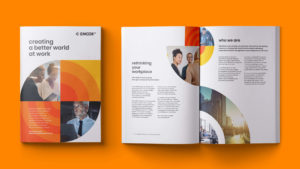
emcor-uk-london-skyline-with-branding-assets-designhouse-scaled.jpg emcor-uk-presentation-slides-designhouse-scaled.jpg emcor-uk-cover-and-spread-of-branded-brochure-designhouse-scaled.jpg

Brand architecture is critical infrastructure. When your brand structure is clear, consistent and well-documented across all digital properties, AI models have the signal clarity they need to accurately represent you. When it’s muddled, AI fills the gaps with assumptions, or simply omits you from recommendations altogether.

We worked with EMCOR UK, a £240 million facilities services business employing 4,000 people across 14 service lines, to address exactly this challenge. Their existing brand architecture had become too complex to communicate clearly to employees, customers or AI systems.

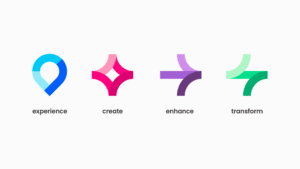
We created coherent brand architecture by delivering a new strategic brand proposition and refining their model of 14 different services into four relatable, memorable propositions: Experience, Create, Enhance and Transform. The result: a brand structure that every stakeholder, human or AI, can understand and represent accurately.

emcor-uk-services-icons-designhouse-scaled.gif

Business impact


Following the 2020 rebrand, EMCOR UK entered a period of accelerated growth in specialist facility services culminating in the sale of the business to OCS Group for £190 million in December 2025. The 2016–2020 period had been characterised by steady, operational performance; the post-rebrand years delivered the focused strategic growth that made the business an attractive acquisition at significant value.

Read the full case study


Get AI brand ready


Start by auditing your current brand architecture. Ask yourself

  • Are the relationships between your parent brand, service lines and methodologies clear?
  • Is this clarity reflected consistently across your website, LinkedIn presence and case studies?
  • Most importantly, is it structured in ways that both humans and AI systems can parse and understand?

When every part of your brand portfolio has a clearly defined role and this structure is reflected consistently across all touchpoints, you create the conditions for both human understanding and AI comprehension.

For marketing leaders managing significant budgets and influencing major branding decisions, the calculus is straightforward. The brands that will maintain visibility in an AI-driven discovery landscape are those investing in clear, consistent brand architecture now.

How quickly can you audit, clarify and implement a structure that works for the AI systems rapidly becoming the primary interface between your brand and potential clients?

Audit your brand architecture – before AI does it for you

written by Sam Steele, Marketing and Communications Director, FCIM


Designhouse has partnered with FTSE 250 companies and global enterprises for over 50 years. We also work with start ups and scale ups to create brand identities that can grow with their business. If you’d like to discuss your brand challenges, we’re ready to talk.

Contact us


Do You Need a Brand Storyteller or a Brand Architect?

It seems everyone wants a brand storyteller these days. But, perhaps what they really need is a brand architect?

In the year to 26 November 2025, the proportion of US LinkedIn postings using the word “storyteller” doubled, covering roughly 50,000 marketing roles and a further 20,000 in media and communications. Chime received over 500 applicants for a single storyteller opening. In the US, Google, Microsoft, even the National Wild Turkey Federation are all recruiting into the category. Accenture have an entire “storytellers team”, who exist to help C-Suite execs gain clarity on business challenges using a narrative framework.

And, according to WSJ, executive mentions of “storytelling” on earnings calls climbed from 147 in 2015 to 469 in 2025. That’s a 3.2x increase over a decade. It’s a steady upward trend for yarn spinners. When CFOs start using a soft word like “storytelling” in front of financial analysts, the narrative has clearly moved from the marketing department to the boardroom.

Most of the commentary around this trend has framed it as a communications story. Google frame it as a business development role: “As storytellers,” a recent Google Storyteller job ad said, “we play an integral role in driving customer acquisition and long-term growth.”

Either way, earned media is shrinking. Newsrooms are contracting. Brands now own their distribution, so they need to produce their own content. AI has flooded the channel with sloppy generic output. Audiences, particularly Gen Z are digital natives who value authenticity over all else.

And all of this, though true, is only one chapter of the story.


Risky Business


In our increasingly complex, interconnected, always on, multi-channel world, narrative is the only thing that holds a business together. It connects customers to suppliers, the through-line from front to back room staff, from C-suite to facilities.

Story is the connective tissue of a complex system. The corporate instinct to hire for storytelling is a reaction to the pressure modern business is under.

And reaction is where the risk lies.

Dropping a journalist into a campaign-driven marketing department is a 20th century response to a 21st century problem. It treats storytelling as a single-set problem with a single-set solution. Buy the skill. Fill the role. Produce the content.


“every piece of content a storyteller produces will read well in isolation and contradict itself in aggregate”


A storyteller can write an excellent case study. They cannot produce coherence across a complex organisation, if that organisation does not already know what it stands for. Without a clear strategic foundation, every piece of content a storyteller produces will read well in isolation and contradict itself in aggregate. The podcast will pull one way. The investor narrative will pull another. The internal comms deck will pull a third. Six months in, the business will have more content and less coherence than ever.

The need for a storyteller is the canary in the coalmine. A symptom of the failure of brand architecture.

Strategic brand architecture is the infrastructure that lets narrative survive contact with complexity. Providing positioning that is distinctive rather than descriptive, specific enough to brief every story the business tells. The set of strategic pillars that filter on-strategy stories from noise. It is the architecture that holds meaning across divisions, projects, platforms, and audiences.


“Strategic brand architecture is the infrastructure that lets narrative survive contact with complexity”


This is upstream work. It does not replace the storyteller. It makes the storyteller effective. Given architecture, a journalist can produce content that compounds. Without it, the same journalist will produce content that at best cancels itself out. At worst is completely dilutes and undermines the brand.


Happy Endings


Adura, the joint venture between Shell and Equinor, demonstrates this principle. Two complex, multinational parent organisations integrated under a single brand architecture with one coherent narrative. This start up JV was solid enough to unite multiple stakeholders and authentic enough to land a £3 billion credit facility, within months of launch. This is because every communication has a coherent brand platform to stand on.


“the brand story told itself once the brand architecture was right”


3Sixty Duty Free is the commercial transformation version of the same strategy. Founder Benny Klepach had a sprawling company on his hands. Designhouse created a coherent brand story and identity to support aggregate growth. Disparate brands, DFASS, Duty Free Air and Ship Supply, became 3Sixty Duty Free & More. A comprehensive brand designed to signal scale and increase market visibility.

Twelve months after the award-winning rebrand launched, Hotel Shilla, the Korean operator behind the world’s third largest travel retailer, announced a subscription to 44% of the share capital of 3Sixty Holding LLC. Industry analysts at The Moodie Davitt Report valued the deal at upwards of US$140 million. Shilla Travel Retail President Ingyu Han specifically cited 3Sixty’s “continued commitment to its strategic approach” as the trigger for finalising the investment, after previous negotiations had broken down two years earlier. The architecture did not just support the story. It unlocked the capital.

In both cases, the brand story told itself once the brand architecture was right.


The Moral Of This Story…


The WSJ numbers suggest that corporate storytelling is firmly on the boardroom agenda in 2026. The consideration for brand and marketing leaders is more fundamental than simply hiring a storytelling into the marketing team.


“turn a complex organisation into a coherent one”


The first question to ask – and answer – is whether the business has the strategic infrastructure to make the hire worthwhile. If you are applying 20th century brand architecture to solve for a 21st century complexity problem, a new hire, no matter how talented, will not help.

The storyteller is not the answer. The work is much further upstream, in the positioning and the architecture that turn a complex organisation into a coherent one. Get that right, and the stories take care of themselves.


written by Sam Steele, Marketing and Communications Director


Designhouse has partnered with FTSE 250 companies and global enterprises for over 55 years. We also work with start ups and scale ups to create brand identities that can grow with their business.  If you’d like to discuss your brand challenges, we’d be glad to talk.

Contact us

When The Shopper is an Algorithm

AI isn’t just changing how people shop. It is becoming the shopper of choice. In this post we’ll explain why that matters for your brand strategy.

Agentic commerce is when AI systems act on behalf of consumers to discover, evaluate, and purchase products. This is no longer a speculative scenario. It is taking shape now, in enterprise procurement tools, in consumer AI assistants, and in the broader infrastructure being built by the world’s largest technology companies.

If you’re responsible for brand strategy, the implications are significant. And they are arriving faster than a laser blink.

  • 63% of global retailers agree that companies without AI agents will fall behind within two years*
  • 58% believe AI agents will handle most customer interactions within five years*
  • 60% of shoppers will use agentic AI to make purchases within the next 12 months**

sources: *Deloitte, **Harvard Business Review

Marketing managers must fundamentally rethink how brands, customers, and AI interact. For anyone responsible for brand, the implications are significant. Read on to understand why and what to do about it…


The AI Customer


To understand the stakes, you need to understand the process.

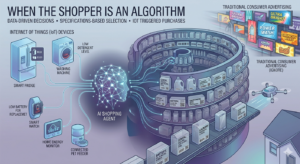
A personal AI agent operating on behalf of a consumer or a procurement team does not browse in the way a human does. It does not linger on a homepage, respond to a mood board, or a well-crafted headline. Instead, it queries structured data, cross-references criteria, weighs variables against stated preferences, and returns a shortlist or a decision.

created using Gemini AI

Agentic commerce compresses days of human research, discovery, and comparison into instantaneous moments of evaluation. And this fundamentally changes how consumers allocate attention and make choices.


The New Criteria


The inputs AI agents use include

  • product specifications
  • pricing data
  • availability
  • reviews
  • sustainability ratings
  • structured brand data – machine-readable and consistently maintained across digital touchpoints

For example, I ask my AI agent find me options for a new TV.  And then the AI agent retrieves and filters options, applying a weighting to the search based on both my stated and inferred priorities. As a result, it may present recommendations, or increasingly, simply complete the transaction. Alternatively, it may advise me to wait while it monitors price fluctuations, and then will automatically buy when the price drops. My input is minimal, the AI is doing all the leg work and, crucially a lot of the decision making.

Therefore, a brand whose product appears in the agentic search has won. The brand that does not is invisible, regardless of how compelling its creative work might be.

This shift is already happening. Adobe reported that AI-driven traffic to US retail sites jumped 670% year-on-year on Cyber Monday. OpenAI is partnering with Walmart, Shopify and payment platforms like Stripe. Perplexity is working with PayPal. And Google just released agentic checkout options. All of which means a bot will search, shop and ship your favourite goods to you, with minimal human input. (GeekWire)

In the B2B space, the pattern is equally pronounced. B2B buyers are increasingly using AI tools to conduct the early stages of vendor research. The tools filter out a significant proportion of the competitive set before the human even sees them.

If your brand is not structured, consistent, and legible to machine systems at that filtering stage, it may never reach the conversation at all.


Brand Identity that’s Visible to Both Computer and Human


Research from Pernod Ricard’s head of digital and design illustrates the risk acutely. When the company analysed how leading AI models represented its brands, they saw immediate issues of mislabelling and lack of visibility. LLM data was often incomplete or incorrect, with one popular model miscategorising an affordable mass-market whisky as a prestige product (Harvard Business Review). The consequences of that kind of misrepresentation, at scale and at speed, are considerable.

Most brand investment is built around human perception. Visual identity conveys authority. Tone of voice builds trust. Campaigns that create emotional connection. These things remain valuable, but now, they are only part of the picture.

The other part, the one that agentic systems respond to, is structural. It is the coherence and consistency of your

  • product data
  • brand architecture across digital channels
  • accuracy and completeness of the information that AI systems read

The disciplines of brand management and data architecture are becoming inseparable.


The Brand Coherence Advantage


By 2030, the US consumer retail market alone could see up to $1 trillion in revenue generated by agentic commerce. Global projections are estimated at as much as $5 trillion. (Microsoft) 

In this new world, organisations with strong, consistently maintained brand architecture have the advantage. A brand that means one thing clearly, that presents itself consistently across every channel and system, is easier for an AI agent to assess and surface. A brand with fragmented positioning, inconsistent written content, or poorly structured digital infrastructure presents as ambiguous. And ambiguity is completely incompatible with algorithmic decision-making.

The organisations that are best placed in an agentic commerce environment will be those that have invested in brand foundations:-

  • clear positioning
  • rigorous consistency
  • well-structured brand architecture

Brand equity now needs to be read by the systems increasingly making decisions on behalf of your customers. If that’s not happening, your  equity  is quietly being eroded. Have a look at your brand architecture today and ask yourself

  • is it coherent?
  • is it consistent?
  • is it searchable?

The brands best placed for this shift are already asking these questions. If you are not yet, now is a good time to start. We can help.

Contact

Case Study: Evara


AI Image Generation

AI Image Generation


When a project demands strong visuals but a traditional photoshoot isn’t the right fit, AI image generation can be a smart option. This is because it’s fast, flexible, and avoids the logistical overhead of location scouting, scheduling, and talent coordination, all of which eat into time and budget.

Queensland Symphony Orchestra’s Facebook ad

It may seem simple, but it’s not easy to get it right.

Just ask the Queensland Symphony Orchestra, whose AI generated ad caused a howl of online backlash for it’s sloppy production. 

As powerful as AI is, it still requires expertise. You need human input to use the tool to it’s fullest, and provide the type of sleek, smart visuals you see below.

AI generated solar parking panels


The cost of AI slop


At Designhouse we treat AI image generation as one tool among many. As a result, we combine it with years of expertise in photography and design to produce imagery that is on-brand, visually precise, and tailored to your specific brief.

Coca Cola’s AI generated Xmas ad 2025

You will never be subject to the “uncanny valley hellscape of randomly assembled, dead-eyed animals” that plagued the 2025 Coca Cola ad.

It was described as “creepy” and “AI slop” by pretty much the entire internet!

Instead, and as a result of our carefully curated process, you will benefit from fast production, fewer moving parts, and visuals that hold up against anything a traditional shoot delivers.

AI generated aerial view of a dockyard


New tools, new rules


AI generated imagery is not a one-size-fits-all solution. But when deadlines are tight or budgets are constrained, this new tech gives us the ability to move quickly. It also means you don’t have to compromise on quality or brand consistency. This is because we work closely with clients on detailed briefs.

Our process always ensures the output is strategically on brand, commercially relevant and creatively strong. Every. Single. Time.

If you are considering AI imagery for an upcoming project, we are happy to discuss whether it is the right approach for your needs.


Designhouse has partnered with FTSE 250 companies and global enterprises for over 50 years. We also work with start ups and scale ups to create brand identities that can grow with their business. If you’d like to discuss your brand challenges, we’re ready to talk.

Contact us

Designhouse Featured in Transform Magazine’s 2026 Industry Predictions

Transform magazine’s annual crystal ball reveals what 40+ brand design leaders predict for the year ahead.


The design industry is pushing back against AI-generated sameness and returning to principles that have always driven effective brand work. These principles are the crucial AI differentiator,  human craft, strategic thinking, and authentic differentiation. Transform magazine has asked leading voices across the global branding industry to identify the trends, challenges, and opportunities shaping the year ahead. For 2026, the predictions reveal a pivotal moment for our industry…

The End of Rigid Brand Guidelines

Matthew Gillman, Design Director at Designhouse, explained how interactive media is changing brand experience.

“In 2026, brand design flips the script from policing to deliberately designing for misuse. Cultural relevance requires letting communities play. Designers build flexible systems with clear purpose and strong DNA, then [gasp] release control. In the AI future, designers focus on creating frameworks robust enough for remix culture, becoming architect rather than gatekeeper. Fearlessly authentic brands require structures communities can inhabit, reinterpret and make their own, without flinching. The era of intentional interactive brand engagement has begun, the rigid guideline era ends.

This shift from control to collaboration reflects what we’re seeing with clients across sectors. The brands achieving genuine cultural resonance aren’t the ones enforcing pixel-perfect consistency—they’re the ones building systems resilient enough to evolve with their audiences.

Five Major Themes Emerging for 2026

Transform’s predictions reveal several interconnected themes that align closely with our approach to brand strategy:

1. The AI Backlash Has Begun

Multiple contributors, including Luke Manning from Pencil Studio, Stanley Vaganov from BeCurious Studio, and Tyler Berry from YeahNice, predict audiences will increasingly reject AI-generated visual content. The reason? Viewers can spot it, and they’re increasingly bored by the sameness. Human craft, intentional imperfection, and authentic making will become premium differentiators.

2. Brand Worlds Replace Brand Messaging

Almas Ahmed from Conran Design Group states it plainly: “Recognition without participation doesn’t build value; people remember what they do, not what they’re shown.” Hamish Shand from Boundless and Jacquelien Brussee from Jibe echo this shift; brands that create immersive experiences people can participate in will outperform those simply broadcasting content.

3. Proving Brand’s Business Value

Samantha Temple Neukom from Northbound predicts C-suite leaders will demand more than beautiful work in 2026. They’ll require revenue attribution, distinctiveness metrics, and evidence that brand investment drives business outcomes. This represents the evolution of  brand strategy from creative project to business infrastructure.

4. Differentiation Becomes Critical

As visual systems converge across industries, Mike Smith from Clout Branding and Shelby Georgis from HLK argue that brands need bold, defining ideas rather than following aesthetic trends. The opportunity lies in strategic positioning, not simply adopting the latest type styles or pursuing visual minimalism.

5. Strategic Motion and Sonic Branding

Andrew Vucko from Vucko and Ed Trotter from Enchant Group both highlight the growing strategic importance of how brands move and sound. In a hyper-speed culture, motion systems and sonic identities are becoming anchors that let brands flex without losing themselves. [although this doesn’t work for all brands, as we discussed in our round up of 2025 brand design trends]

What This Means for Business Leaders

These predictions represent fundamental shifts in how brands create value. For marketing and business leaders, three strategic implications stand out:

  • Investing in authentic brand systems pays dividends. As AI lowers the cost of generic output, human-crafted brand work that reflects genuine strategy becomes more valuable, not less.
  • Rigid control is counterproductive. Brands that design flexible systems with clear purpose but allow interpretation will achieve greater cultural relevance than those enforcing strict consistency.
  • Brand work must demonstrate business impact. The days of separating “brand” from “business” are over. Effective brand strategy drives measurable outcomes, from customer acquisition to talent retention to premium pricing power.

Looking Ahead

At Designhouse, we’ve built our approach on a simple principle: brand design isn’t about creative expression for its own sake. Our design studios are award-winning and brilliant at their craft and they also understand how to create business value through strategic clarity, cultural relevance, and systems built to endure.

The predictions in Transform’s piece validate this direction. As the industry grapples with AI’s capabilities and limitations, the brands that will thrive are those with clear strategic foundations, flexible systems, and authentic human connections at their core.

Read the full Transform magazine predictions here.

If you want to build a brand system designed for 2026 and beyond, Contact us 

How Coutts Turns a Rooftop Garden into a Brand Statement

Coutts is a 330-year-old private bank. Its brand rests on discretion, quality and a relationship with wealth that goes beyond the transactional. Establishing a garden above its Strand headquarters, growing saffron, wasabi and Chilean guava for its own restaurant is more than simple horticulture.

Designhouse CEO Lavinia Culverhouse recently visited the Skyline Garden for a private tour, and it is hard to miss what Coutts is doing here. The garden yields fresh produce directly for the bank’s hospitality offering. It also hosts client events and workshops. And it sits, quite literally, above one of London’s most recognisable financial addresses. Every choice, from the global varieties grown to the sustainability credentials, reinforces the brand. Coutts wants its clients to feel  the values of the institution. Considered. Unhurried. Rooted in something real.

For those of us working in strategic brand design, it is a useful reminder that the most compelling brand expressions are rarely the ones that announce themselves loudest. A rooftop garden is not a logo or a campaign. But it communicates values, provenance and a particular idea of excellence in a way that a tagline rarely can.

The brands that endure tend to be the ones that find ways to make their values tangible, experiential and consistent across every touchpoint, including the ones nobody would think to call branding at all.


Designhouse has partnered with FTSE 250 companies and global enterprises for over 50 years, delivering strategic brand consultancy that creates measurable competitive advantage. If you’d like to discuss your brand challenges, we’d be glad to talk.

Contact us

New studio at Uncommon, Holborn

Designhouse has a new home. We have recently moved into Uncommon at Holborn. Sitting between the City and the West End, the move has prompted us to think about what the right working environment actually means for a strategic design agency.

The honest answer is that worrying about a fixed lease and building maintenance do not make us better at brand design. Flexibility does. The ability to scale space to reflect how we are actually working. We can focus resource on the work rather than the building. It’s a straightforward operational decision. For an agency that advises clients on where to invest for maximum impact, we apply the same logic to our own business.

There is also something to be said for the environment itself. Uncommon is a B Corp, designed around wellbeing and sustainability. It’s Holborn location puts us at the centre of a diverse community of businesses. The cross-sector conversations that happen in shared spaces are genuinely useful. Creative thinking rarely emerges from a sealed office floor.

And happily, there is free cake on Tuesdays. Yay! It turns out a well-placed queue for a good muffin is a surprisingly effective way to meet the diverse array of people working around you.

With change comes new opportunities, and we are excited about what’s ahead as we settle into our new central London home.


Designhouse has partnered with FTSE 250 companies and global enterprises for over 50 years, delivering strategic brand consultancy that creates measurable competitive advantage. If you’d like to discuss your brand challenges, we’d be glad to talk.

Contact us

Senior Designer Invited to King’s Garden Party

Our Senior Designer, Al Connolly, was nominated to represent Creative Youth Charity at the King’s Garden Party hosted at Buckingham Palace.

The prestigious honour was bestowed for outstanding work in the community of South West London, showing incredible integrity and strong moral fibre from one of our key creatives in the team.

We are so proud to have one of our own recognised for contributions to support those with a tougher start than most, raising important funds to create outlets for young people to express themselves through the arts and challenging them to discover their passion and purpose through collaboration and expression.

Flowers Exhibition Saatchi Gallery

Finding Inspiration In Nature

Last week, the Designhouse team took a break from the studio. We were celebrating CEO Lavinia Culverhouse’s birthday with a visit to the Flowers exhibition at the Saatchi Gallery in Sloane Square.

With over 500 works spanning everything from botanical roots to the intersection of flowers and fashion, it was a rich and genuinely surprising day.


It is easy to underestimate how much time away from a screen can sharpen your thinking. Exhibitions like this one are a reminder that the strongest visual language often comes from nature. Form, shapes, colour – all  things that nature designed long before brands existed. For those of us working in strategic brand design, that kind of reference point matters.


The best brand work does not emerge from a brief alone. It comes from people who are curious, who look broadly, and who bring a wider frame of reference to the table. Days like this are part of how Designhouse stays sharp.

Happy birthday, Lavinia, you deserve all the flowers.
It was a bloomin’ marvellous day!


Designhouse has partnered with FTSE 250 companies and global enterprises for over 50 years, delivering strategic brand consultancy that creates measurable competitive advantage. If you’d like to discuss your brand challenges, we’d be glad to talk.

Contact us

How to create feelings, frame by frame

Ever wondered how animated characters can evoke such deep and genuine connections with us?

The magic lies in an animator’s ability to breathe life and personality into not just characters, but even lines and shapes, transforming inanimate drawings, making them feel real and relatable. This skill is even more important in today’s digital and AI-driven world.

Disney’s 12 Principles of Animation illustrate this best.

From the elasticity of squash-and-stretch movements to the tension built through anticipation, these subtle techniques create strong, visceral connections with the audience. When executed successfully, animation becomes a powerful tool for storytelling and your brand.

A telling stat from Raw Pictures outlines that viewers retain 95% of a message when received through a piece of video content, compared to 10% when reading a communication.

A substantial 71% of consumers are more likely to recommend a brand if they feel an emotional connection to it, emphasising the role of emotions in fostering brand loyalty.

At Designhouse, we often use Disney’s 12 Principles of Animation to create captivating, emotionally driven content that connects with audiences.

In this article, we wanted to spotlight the following three principles:

  • Squash & Stretch

  • The Arc

  • Anticipation

By mastering these principles, our team crafts animations that do not just move, they resonate. From brand stories with a core heart to dynamic explainer videos communicating a mission, we create work that leaves a lasting impression and a strong identity.

Together with our client partners, we take initial concepts, brief in core values and purpose and deliver emotionally driven motion content that serves a greater purpose:

Squash & Stretch

The Squash & Stretch principle is a technique used to add movement, energy and character to motion.

This principle can be subtle whilst delivering a unique expression, giving text and visuals a sense of weight, flexibility and impact. The more natural and organic a movement feels, the more a brand can benefit from becoming more relatable and emotionally connected.

What feeling does this communicate?

Fluid, expressive motion enhances storytelling, allowing audiences to connect and relate to action and reaction. Whether it’s a squashed bouncing ball or a stretched font style, the Squash & Stretch principle can breathe life into a brand.

The Arc

Designhouse uses The Arc principle to ensure every movement feels fluid, natural and emotionally engaging. In real life, motion follows curved paths – not stiff, straight lines. By applying arcs to character actions, gestures and objects, we bring a sense of realism and flow to every frame.

How does this drive the narrative?

Animations feel lifelike, helping audiences connect emotionally with the story. From a subtle head tilt to a sweeping hand gesture, arcs add personality, believability and depth – turning movement into emotion.

Anticipation

At Designhouse, we use the Anticipation principle to construct stakes and a sense of immediacy and engagement in our motion work.

By building tension, the Anticipation technique keeps an audience hyper-focused and hanging on for the next movement, delivering impact and landing a message with gravitas.

What impact does this leave?

Anticipation goes beyond simply smoothing out motion – it builds excitement, tension and emotion, pulling audiences deeper into the narrative. It transforms basic movement into meaningful storytelling.

Don’t just move, connect

Together with Designhouse, create animations that don’t just move – they connect, allowing your brand identity to thrive and your mission to resonate.

Turn your ideas into motion that matters by contacting our team today.

View all 12 Disney’s Principles of Animation

Transform Awards Europe 2025

What a thrilling night to be a brand and design agency!

We’re incredibly proud to have taken home five awards at the Transform Awards Europe 2025:
🏆 Silver | Bring Energy and Designhouse – Best Implementation of a Brand Development Project
🏆 Silver | Bring Energy and Designhouse – Best Naming Strategy (New Name)
🏆 Bronze | Loan Market Association (LMA) and Designhouse – Horizons Quarterly Publication – Best Brand Experience
🏆 Bronze | SRE Ltd and Designhouse – Best Visual Identity from the Property, Construction & Facilities Management Sector
🏆 Highly Commended | Bring Energy and Designhouse – Best Visual Identity from the Energy & Utilities Sector

What the Fashion Runway Can Teach Us About Brand Identity

The Designhouse team visited the Lightroom in King’s Cross recently for Vogue: Inventing the Runway. It’s an immersive exhibition tracing the fashion show from the intimate couture salons of the early 20th century to the era-defining spectacles of recent decades. Narrated by Cate Blanchett, it is a genuinely compelling piece of experiential storytelling. With incredible Vogue archive featuring designers from Chanel and Dior to Vivienne Westwood and Maison Margiela,

Fashion Show as Brand Statement


What struck us was how clearly the exhibition frames the runway as a communications medium. It’s not just a vehicle for clothes. The show is where a designer’s identity is made legible. It’s where values, references and audience are declared season after season. In that sense, it is not so different from the work we do. Designers of all disciplines struggle with the question of how to make tangible something that is abstract. The challenge is to embody  a vision, a set of values, a sense of who you are and who you are for, to make it visible and felt by an audience.

Authenticity is Always In style


The figure who stayed with the team longest was Patrick Kelly.
Born in Mississippi in 1954, Kelly became the first American admitted to the Chambre Syndicale du Prêt-à-Porter, the governing body of the French ready-to-wear industry.

His runway shows looked genuinely fun. Models sashaying and twirling, turning the catwalk into a party. The majority of his models were Black at a time when that was far from the norm.

His signature playful buttons were a direct reference to his grandmother, who mended his family’s clothing with mismatched buttons from her sewing basket. That detail matters: a brand rooted so specifically in personal history, translated into a visual language that was immediately recognisable, joyful and subversive all at once.

Kelly was extremely proud of his roots and culture. He actively incorporated his own background into his practice. And he merged the celebration of Black identity with a contemporary aesthetic. He built a brand with genuine conviction behind it. One that communicated something real rather than simply competing for attention. It is a lesson that transfers well beyond fashion.


Designhouse has partnered with FTSE 250 companies and global enterprises for over 50 years, delivering strategic brand consultancy that creates measurable competitive advantage. If you’d like to discuss your brand challenges, we’d be glad to talk.

Contact us

M6N – A Brand Under Pressure

The first weekend of the Six Nations delivered everything it usually promises. Kit design upgrades were in evidence across all the teams. France were imperious in Paris, Ireland edged a tight one in Dublin, and Scotland held off a determined Italy. But alongside the on-the-pitch kit and caboodle, there was a parallel conversation running, one that those of us in brand design found equally compelling.

Rebrand Reactions

The tournament rebranded to M6N ahead of its 25th anniversary in 2025. The new identity was developed by London creative agency How Now. It centres on a slanted, shiny wordmark rendered in a fiery orange gradient, chosen to channel warmth and optimism. The reaction, predictably, was split.

Fans compared it to everything from Mars bar branding to the credits of a 1996 comedy film. Others called it a necessary evolution. That kind of response is familiar to anyone who has worked through a major rebrand with a client. The logo lands first, stripped of context, and people react to a mark rather than a system.


Standing Strong In the Face of Criticism

Michael Ritson, Head of Marketing & Creative at Six Nations Rugby was clear on the intent. It is designed to create memory structures with the brand, attract younger fans, and build something that works as a digital-first identity. The men’s rebrand also aligns with the Women’s Six Nations identity launched in 2023. There is now a unified, intuitive naming structure across M6N, W6N and U6N. As a result, each stands on its own, while also remaining part of the same family.

Ritson’s response to the initial backlash was straightforward: trust the strategy, and see how it comes to life when the games kick off. That is sound thinking. A brand identity is not a logo on a white background. It is colour filling a stadium, players wearing it, broadcasters running it across millions of screens, supporters wrapping themselves in their nation’s colours. Seen in that context, across that first weekend, it worked. Brilliantly.

The Final Result

The M6N rebrand is a useful case study in one of the most consistent truths in brand design. Reaction at launch is rarely the measure of success. The measure is whether the identity holds, scales and builds meaning over time.

And this is most definitely a brand identity that earned its conversion.


Designhouse has partnered with FTSE 250 companies and global enterprises for over 50 years, delivering strategic brand consultancy that creates measurable competitive advantage. If you’d like to discuss your brand challenges, we’d be glad to talk.

Contact us

Design Week Internship Spotlight

Dh CEO, Lavinia Culverhouse,  talks to Clare Dowdy at Design Week.  about Internships. They discuss what design leaders look for when offering internships and employing young talent. Why it is important to support new talent by providing opportunities to gain industry experience, and how companies benefit from fresh perspectives and diverse backgrounds.

Check our careers page 

Read the full article here


Zines creative chat

In our latest CreativeChat, designer Victoria H, curated an exhibition exploring the history of zines.

Zines often promote diversity and serve as catalysts for change, amplifying the voices of underrepresented and marginalised groups to bring fresh ideas into focus.

Inspired by this history, each member of the team crafted their own double page spread which were combined to become a Designhouse zine.

How do you use design to tell your story?

Trip to Euston Food Bank

Today, we popped across to the Euston Foodbank to drop off some much-needed supplies for those who might go without this holiday season.

Our Designhouse team have been loading food items into our collection box this week as a small favour to help local people in crisis, hoping to provide some form of comfort this Christmas.

We also collected clothing items that seemed better passed to those battling the harsh conditions of winter.

A huge thank you to all the volunteers we interacted with today. You are nothing short of exceptional in your tireless work to better the circumstances of those who are struggling.

Learn how you can donate to the Euston Foodbank here > https://lnkd.in/ejsycfMj

Discover Foodbanks near you > https://lnkd.in/eWz75tDt

Every Woman Entrepreneur Awards

Designhouse CEO, Lavinia Culverhouse, had the honour of attending the Everywoman Entrepreneur Awards 2024.

The annual awards celebrate female entrepreneurial success, and the achievements of female business owners, like Lavinia.

Everywoman is an expert in the advancement of women in business. For two decades they have hosted highly acclaimed events, elevating female role models and high-quality training programmes, helping to shape tomorrow’s leaders and their teams.

Their learning and development platform, the everywomanNetwork, has thousands of members in over 150 countries, enabling women and male ‘ambassadors of change’ to access first class development resources. The digital platform has been shown to have a positive impact on the way women view their own careers and future progression, whether that’s with their current employers or as entrepreneurs.

Lavinia was a a guest of Stonehage Fleming.

Meet Our Director Matt

Matt Gillman has been at the heart of Designhouse for 10 years, helping steer our agency’s design and branding approach to achieve success for our clients.

He recently led the Cruxy rebrand, driving the creative solution for the tech specialists’ unique positioning. Check out our case study here.

Cheers to a decade of Designhouse brilliance, Matty!

Creative chat: Manhole Covers of the World

“Art (Design) is not what you see, but what others make you see.”

Edgar Degas


This morning, Designhouse welcomed Björn Altmann, graphic designer, illustrator and typographer, for one of our Creative Chat sessions, and it was a genuinely inspiring start to the day.

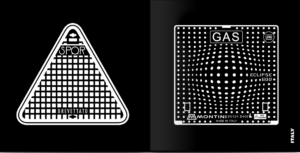
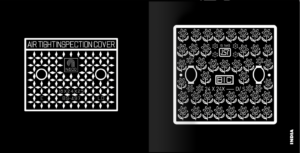
Björn shared his latest publication, Manhole Covers of the World, produced in collaboration with Swiss publisher Niggli AG.

The book is exactly as it sounds, and all the better for it. A meticulous, visually arresting catalogue of manhole cover designs drawn from over 80 countries, presented through 170 crisp white-on-black illustrations.

The result is a quietly extraordinary object, one that reframes something entirely overlooked as a lens through which to explore culture, craft and civic identity.

The conversation that followed was rich. Björn spoke openly about the process behind the project, a creative journey that unfolded over two decades.

From the earliest concept through to finished publication, the commitment required to see something so singular all the way through was not lost on anyone in the room. This is the kind of labour of love that rarely gets made, and even more rarely gets made well.

What struck the team most was the discipline behind it. Twenty years of due diligence. Quietly building something with rigour and curiosity, without losing sight of what made the idea worth pursuing in the first place. It served as a timely reminder of the value of following a creative instinct through, however long the road.

We’re grateful to Björn for sharing his time and his thinking with us. Sessions like these are part of what makes Designhouse the place it is.


Designhouse has partnered with FTSE 250 companies and global enterprises for over 50 years, delivering strategic brand consultancy that creates measurable competitive advantage. If you’d like to discuss your brand challenges, we’d be glad to talk.

Contact us

TypeTogether and award winning typography

At Designhouse, we recognise the key role typography plays in graphic design. And we keep upto date by collaborating with leading type designers and foundries. It’s important to keep abreast of latest developments and inspire our team to think creatively about type.

Which is why we are excited to welcome Stuart Brown from TypeTogether, the independent digital type foundry established in 2006 by Veronika Burian and José Scaglione, to our studio.  Stuart generously shared his time and expertise to showcase some incredible work. It was a brilliant opportunity to deepen our understanding of typography and appreciate the beautiful typefaces TypeTogether craft.

A bespoke or customised existing typeface can significantly elevate a brand. It ensures that font aligns with the brand’s personality, making the brand more memorable and distinctive.

We know this is true because our  identity and packaging brand work for American chocolate brand Wheatley Ranch won the award for Best Use of Typography at the North America 2020 Transform Awards

Deutsche Numis Raised in London

When creative minds meet capital markets!

Our team visited Deutsche Numis at their Gresham Street offices, right in the city’s heart looking over St Paul’s, to film content to support their latest Raised in London campaign.

Read the case study here


Designhouse has partnered with FTSE 250 companies and global enterprises for over 50 years. We also work with start ups and scale ups to create brand identities that can grow with their business.  If you’d like to discuss your brand challenges, we’d be glad to talk.

Contact us

Financial Promoter Awards Shortlist

We are delighted to share that we have been shortlisted for not one but two Financial Promoter Awards for Design Agency of the Year and Content Campaign of the Year 👏 > https://financialpromoter.co.uk/fp-awards-shortlists/

Nominations included our work for the Loan Market Association (LMA) including their Horizons ESG publication > https://horizons.lma.eu.com/march2024/

London 2012 Olympic Games

As the Paris 2024 Olympic Games come to a close, we wanted to share some Designhouse Olympic history.

In 2005, the then President of the IOC, Jacques Rogge, announced that London would host the Games for a third time.

To commemorate the greatest sporting spectacle on earth returning to the capital, we were delighted to collaborate with Nick Knight on a range of Royal Mail stamps.

The Royal Mail stamp designs actually originated from Knight’s award-winning photography for the 1996 Atlanta Olympic Games. When London won the bid to host the 2012 Games, Royal Mail reissued these iconic dynamic sports photography designs as a special 1st Class miniature sheet

These designs demonstrate how creativity and athleticism can come together to showcase something beautiful and inspirational. As well as the power that branding has to represent elite sportsmen and women and frame record-breaking triumphs.

Discussion at The Drum Labs

It pays to kick off a midweek morning with some creative inspiration!

Our Design Director, Matt Gillman, attended an insightful discussion at The Drum Labs yesterday, with the Creative Editor of The Drum, Tom Banks, presenting a new strategic design direction for the namesake’s publication.

Learn more about her experience here


DH summer party at Denbies Wine Estate

The Designhouse gang enjoyed a brilliant summer party on Friday at Denbies Wine Estate Limited in Dorking 🍷🍾🥂🌞

The rain held off as we experienced a fantastic tour of the vineyard grounds and factory, tasting the delicious selection of wines on offer and learning about the history of the grounds, local wine regions and the fermentation process.

We played bowls on the lawn, quizzed, drew our Euros Sweepstake and had lots of laughs.

Football Shirt Friday! ⚽

In honour of Real Madrid C.F. winning the UEFA Champions League Final, the guys and girls at Designhouse decided to highlight the power of creativity and branding in elite-level sport with our very own Football Shirt Friday ⚽

Branding has the power to transcend culture, with our favourite teams’ logo and colour identity recognisable all over the globe!

Bring Energy Creativepool Editorial

We were delighted to have been featured in Creativepool’s recent editorial, on our work on the Bring Energy brand! Check it out here.

Our Design Director, Richard Debenham, spoke to creating a new brand name and visual identity for Bring Energy, developing the strategy, naming & positioning of the creative concepts and championing them through delivery, reflecting Bring Energy’s commitment to pioneering low-carbon heating and cooling solutions for cities across the UK.

Luxury Green Brands

Congrats to ROLEX and their agency for their new campaign celebrating colour and the intrinsic part it has played in defining their brand.

Their iconic green seal, established in 2015, characterises watchmaking excellence and the precision, durability and reliability of their craftsmanship.

Never underestimate the power of colour as a core component of your brand, delivering cut-through in a sea of messages and images.


Financial Promoter 2024

We attended Rhotic Media‘s Finance Promoter Live as a proud event sponsor. A huge thank you to the Rhotic Media team for organising such an engaging day, bringing together forward-thinking financial marketers.

With our sector experience, we recognise the importance of storytelling in building a strong brand narrative that cuts through crowded marketing communications.

Vertree website has gone live!

Check out Vertree’s new website – https://vertree.earth!

Part of Hartree Partners, Vertree provide companies with high-impact solutions to achieve net zero emissions.

A fantastic collaboration with Lucy Haines MSc PIEMA, Perla Hilario Almonte and team on an optimised user experience, design and build that engages visitors with a simple way to discover more information about their services.

BGB and CBS Global reports are now live!

We’re excited to share the British Gas Business and Centrica Business Solutions global reports which have now gone live!

These reports address important issues businesses should be acting on to meet their net zero and sustainability goals. With increasing pressure from all stakeholders, now is a more important time than ever to invest in your sustainability.

Read the reports below to learn more:

BGB 👉 https://lnkd.in/eErWCSAf

CBS 👉 https://lnkd.in/eRHkH985

RELX: A UK success story

Designhouse are incredibly proud of our collaboration with the RELX group.

Including our on-going brand development projects for LexisNexis Risk Solutions and our award winning rebrands for EG and Accuity.

We are confident they will continue to go from strength to strength. One of our great British success stories. 🇬🇧

LMA Syndicated Loans Conference 2023

Check out our work for the Loan Market Association (LMA) Syndicated Loans Conference that took place at the Queen Elizabeth II Centre in London yesterday!

Every year, the team at LMA host their annual conference with over 800 delegates, the event offers a platform for discussing industry challenges and collaboratively pinpointing solutions as well as determining the best path forward.

We created a suite of deliverables including the conference theme, event stands, banners, merchandise, lunch and cocktail menus and signage.

If you would like to know more about how we can help elevate your event, do reach out to us at dh@designhouse.co.uk


Gabrielle Chanel. Fashion Manifesto

This week we’re excited to share the ‘Gabrielle Chanel. Fashion Manifesto’ exhibition.

This exhibition pays tribute to Gabrielle Chanel’s profound influence on fashion. Highlighting an array of significant Chanel pieces, including an early surviving garment from 1916, ensembles tailored for Hollywood luminaries Lauren Bacall and Marlene Dietrich, an early groundbreaking evening trouser ensemble by Chanel, and selections from Chanel’s final collection in 1971.

Delving into the designer’s trajectory from the launch of her inaugural millinery boutique in 1910 to her ultimate collection in 1971, the exhibition will dissect how Chanel’s own individual style informed her creations, consequently revolutionizing women’s attire forever. While the era was characterized by corsets and voluminous skirts, epitomized by Christian Dior’s ‘New Look’, Chanel drew inspiration from menswear, particularly the attire worn by the British upper class during their sporting weekends in the countryside. She seamlessly integrated many of these menswear elements into her designs, employing tweed and wool, and popularizing trousers and knitwear for women.

Head over to the Victoria and Albert Museum this weekend to check out the first UK retrospective of Chanel’s work!


Colors Festival: A Symphony of Hues exhibition

This week, we’re thrilled to share the “Colors Festival: A Symphony of Hues” exhibition!

Immerse yourself in a vibrant world curated with the brilliance of colors, all brought to life by a diverse array of artists and creators.

From breathtaking installations to interactive workshops, this exhibition promises an unforgettable journey through the spectrum of human expression.

Whether you’re an art enthusiast, a culture seeker, or simply looking for a day filled with creativity and inspiration, the Colors Festival caters to all! 🌟

Head over to Camden this weekend to experience it for yourself!


Oncosil Annual Report 2023

We are thrilled to unveil the newly released OncoSil Medical 2023 annual report! 🎉

A great collaboration with Caner Turay – we are delighted with the result.

Dive into the full report here – https://lnkd.in/dE2nWb_v

If you would like to know more about how we can help elevate your annual report, do reach out to us at dh@designhouse.co.uk.


A world in common

This week we’re excited to share a Tate Modern exhibition on contemporary African photography!

‘A world in common’ is in London to celebrate Africa’s diverse culture and history, portrayed in photography, audio and film! The exibition explores how images travel through time, creating a beautiful mixture of historic elements weaved in contemporary art.

The exhibition is open to visitors from 6 July 2023 until 14 January 2024, at the Tate Modern Gallery in Banskide London.


Action, Gesture, Paint: Women Artists and Global Abstraction 1940-70 exhibition

In honour of Women’s History Month coming to an end, we wanted to share the ‘Action, Gesture, Paint: Women Artists and Global Abstraction 1940-70’ exhibition.

This exhibition showcases 81 unsung international female artists. Showcasing art created between 1940 and 1970 from all over the world, recognising these women’s overlooked contribution to the Abstract Expressionist movement.

Head over to the Whitechapel gallery this weekend to check out the works that inspired the likes of Pollock and Rothko.

Picture credits: Miriam Schapiro’s Idyll II (1956)

EG at MIPIM

Spotted!! The EG stand at the Leading Property Market event, MIPIMWorld in Cannes.

We collaborated with the EG team to visualise the event message of ‘Connecting UK real estate to drive growth and prosperity.’ To visually represent the UK real estate market, our design showcases a skyline of UK landmarks and uses negative space to incorporate the names of various UK cities. The colours chosen draw on EG’s signature purple, which ties in the MIPIM collateral with the overarching brand.

We wish the EG team success at the event!

If you would like to know more about how we help our clients such as LexisNexis Risk Solutions elevate their event assets, do contact us at dh@designhouse.co.uk.

When light becomes colour: Dan Flavin at David Zwirner

Earlier this year, Matt, our Design Director, paid a visit to David Zwirner’s London gallery on Grafton Street to see the Dan Flavin exhibition, coloured fluorescent light. It was, by his own account, one of those rare experiences that stays with you long after you’ve left the room.

Flavin is an American minimalist who worked almost exclusively with commercially available fluorescent tubes from 1963 until his death in 1996. He made colour do things that paint simply cannot. Rather than applying pigment to a surface, he poured light into space, flooding walls, floors and ceilings with hues that shifted depending on where you stood. Pink bled into red. Cool white held its distance. The room itself became the canvas.

The exhibition brought together works that re-created Flavin’s 1976 shows. It presents all nine colours of his visual vocabulary, from red and green to the various whites he employed. Seeing them together made one thing abundantly clear: colour is never neutral. It carries weight, temperature, and intent.

For Matt, the visit was a useful provocation. At Designhouse, we think carefully about colour Not as decoration, but as a strategic tool. The choices we make for clients are considered against architecture, audience, and longevity. Flavin understood this instinctively. His restraint, working within a deliberately limited palette, produced work of extraordinary range and emotional depth.

It is a principle we return to often. The most enduring colour decisions are rarely the boldest, they are the most deliberate. Over fifty years of working with major brands has taught us that a well-chosen colour does far more for a brand than novelty ever could. Flavin knew it. We do too.


Designhouse has partnered with FTSE 250 companies and global enterprises for over 50 years, delivering strategic brand consultancy that creates measurable competitive advantage. If you’d like to discuss your brand challenges, we’d be glad to talk.

Contact us

The Winter Lights Festival

This week we’re excited to share the Winter Lights Festival.

This is the largest festival of its kind in London, annually transforming Canary Wharf with over 20 installations. Designed as an immersive trail, you are guided by various light art and interactive installations created by some of the most innovative artists in the world.

To brighten up your evening, head over and check it out before the 28th of January.

New Brand Identity for Hong Kong International Airport

Designhouse Collaborates with Shilla Duty Free 

HONG KONG  – London-based branding consultancy Designhouse, in partnership with retail design agency gpstudio, has developed the name and visual identity for Beauty&You. The travel retail store concept operated by Shilla Travel Retail (The Shilla Duty Free) is at Hong Kong International Airport.

The concept was created for Shilla in order to secure Airport Authority Hong Kong’s beauty and accessories retail tender. As a result, the winning strategy redefines duty-free shopping by combining cosmetics, perfumes, fashion, and accessories into an interactive retail environment.

Brand Concept and Visual Identity

Designhouse developed the “Beauty&You” brand identity to create an inclusive, personalised experience for travellers. Key elements of the design strategy include:

  • Inclusive Naming: The use of “You” was chosen to broaden customer appeal beyond traditional cosmetics branding. The aim is to create an engaging and gender-neutral destination for self-reward and gifting.

  • Bespoke Ampersand: The ampersand acts as a core unifying element across visual touchpoints and promotional assets, including custom brand applications crafted for seasonal campaigns such as the Year of the Dog.

  • Visual Layering: Bold typography, vibrant colors, and overlapping design elements reflect the multi-layered culture of Hong Kong.

Strategic Partnership

The collaboration stems from Designhouse’s previous travel retail work with The Nuance Group. Roberto Graziani, leading Shilla’s retail initiatives at Hong Kong International Airport, selected Designhouse and gpstudio to create a concept centred on the intersection of fashion and beauty.

Alongside the core visual identity, Designhouse created local implementation and point-of-sale (POS) brand guidelines for the ongoing roll-out of the store concept.

To explore the full branding initiative and see additional assets, read more here.


Yayoi Kusama x Louis Vuitton pop-up.

This iconic collaboration has taken over Harrods. Ranging all the way from a robot Kusama in the window, to an infinity mirror room, to a patisserie counter, all covered in polka-dots of course. Kusama’s art also lights up the stores entire building facade, using the iconic Harrods exterior as a canvas.

Make sure to head over to Knightsbrige to check it out!

Bailey: Vision and Sound exhibition

We are delighted to share the Bailey: Vision and Sound exhibition.

This exhibition features David Bailey’s portraits of legendary musicians and explores his influential role in cultivating the image of music through his camera lens. Some of the exhibition’s highlights include a unique screenprint of John Lennon and Paul McCartney, an early portrait of young Mick Jagger before the Rolling Stones, and an unseen portrait of Dizzy Gillespie.

Head over to the Dellasposa Gallery to check it out!

Universal Everything- Lifeforms

We are delighted to share the ‘Universal Everything- Lifeforms’ exhibition.

This exhibition brings together 14 projects within a series of habitats designed by Ab Rogers Architects. Featuring unpredictable, generative pieces and installations that mirror and shift with both time and audience interactions. The lifeforms are made with generative software meaning that the art is always transforming.

Head over to 180 Strand to check it out!

Photo: 180 The Strand

EY Exhibition

We are delighted to share the EY exhibition.

This exhibition features many Cezanne works displayed for the first time in the UK, showcasing the artist’s struggle between seeking official recognition and pursuing his own unique art style.

For a look into the works that paved the way for modernism and abstraction, head on over to Tate Modern this weekend.

Dream Travel Exhibition

This exhibition brings together two series of landscape paintings, both Hong Kong landscapes from Wong’s real life experiences and landscapes of British countrysides which he drew from Google Earth during the pandemic, when travel was restricted. Wong inserts his trademark toy car into each UK landscape paintings to recall the idea of a virtual road trip. The exhibition aims to meditate our innate desire to travel in not only the real world, but also the imagined.

Head over to Unit London to check it out!

Yayoi Kusama: Infinity Mirror Rooms Exhibition

This week’s exhibition features the ‘Yayoi Kusama: Infinity Mirror Rooms.’

The mirrored walls in combination with a shallow pool of water reflect and multiply tiny colourful lights which create the feeling of infinite space. This is one of Kusama’s largest installations to date, allowing it to fully transport you to the artist’s vision of endless reflections.

This mesmerising exhibition has been extended until June 2023 due to popular demand, so make sure to head over to Tate Modern to check it out, this is one not to miss!

Follow us at Designhouse for regular branding news and to keep up to date with new openings.


Frieze Sculpture Exhibition

We are delighted to share the ‘Frieze Sculpture’ exhibition.

Head over to Regent’s Park this weekend to visit the exhibition featuring 19 large-scale works by artists including John Giorno and Ro Robertson. This year’s display engages with a number of themes from poetry to political messaging.

Follow us at Designhouse for regular branding news and to keep up to date with new openings.


‘Frameless’ Exhibition

We are delighted to share the Frameless exhibition.

This multi-dimensional art experience allows you to fully immerse yourself in artworks from Monet, Cezanne, Kandinsky, Klimt and so many more. This exhibition features four galleries with a different type of immersive technology in each one.

Head over to Marble Arch to lose yourself in a world of light, colour and sound.


Frieze Returns to London

We are delighted to share that Frieze has returned to London!

Frieze is one of the world’s most influential contemporary art fairs, taking place every October in London for one week only. The fair brings together six millennia of art- from rare antiques to luminaries of the 20th century. This year’s exhibition celebrates the cultural life of London and showcases its global reach.

Head over to Regent’s Park this weekend, this is one we wouldn’t want to miss.